
Meta’s new model can run locally on your laptop
Plus, 🧐How to audit your subscriptions and cancel what you don't need using Claude, OpenAI launches a powerful AI model for cyber defenders, and more!


Hola Decoder😎
If someone forwarded this to you and you want to Decode the power of AI and be limitless, then subscribe now and Join Decode alongside 30k+ code-breakers untangling AI.
🔓 Meta Pushes Its AI Strategy Deeper Into Open Source
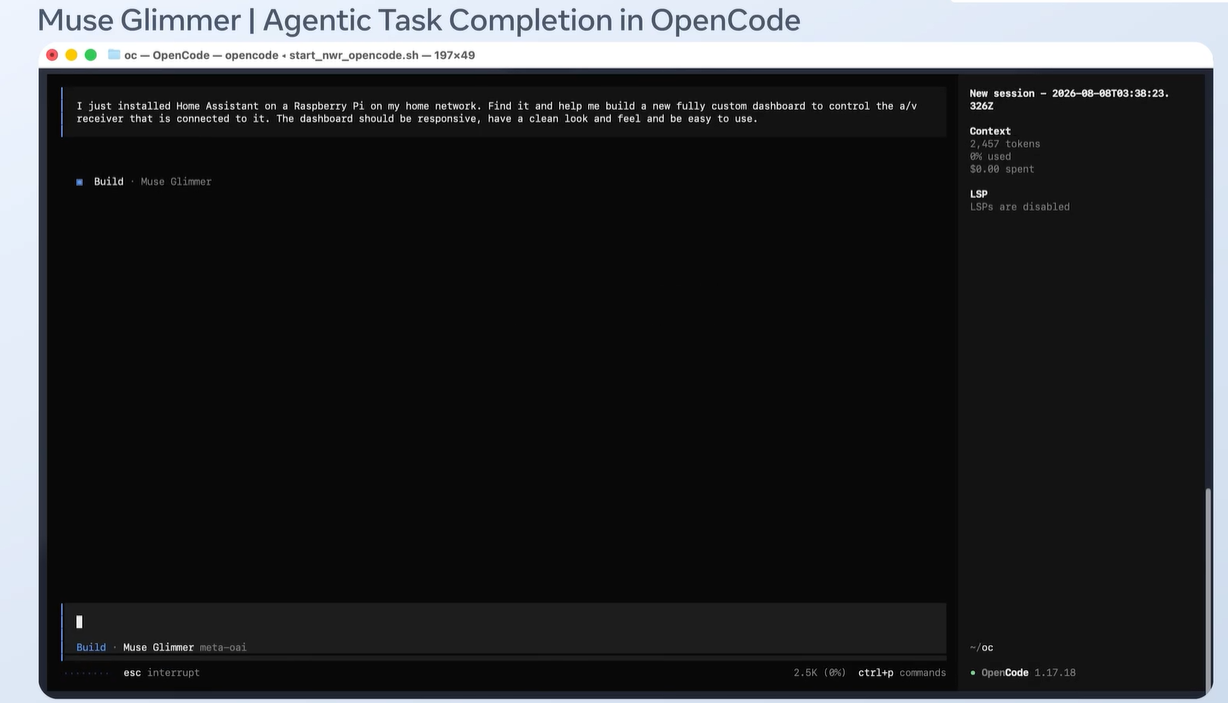
Meta released Muse Glimmer alongside a new essay from Mark Zuckerberg arguing that advanced AI should remain broadly accessible. The company also plans to open Muse Spark 1.2, extending that philosophy to more capable models.
The Decode:
1. AI agents can run locally - Muse Glimmer is small enough to run on a laptop while powering agents entirely on-device. It reportedly beats similarly sized Gemma4 and Qwen3.6 models across several reasoning, coding, and agentic tests.
2. Muse Spark is going open - Alexandr Wang said Meta will publish Muse Spark 1.2's weights "soon." The release could give the U.S. ecosystem a stronger open-model competitor against rapidly advancing Chinese models.
3. Zuckerberg challenges centralized AI - Zuckerberg argued that putting advanced AI under an "extreme concentration of power seems inherently problematic," positioning broad access and open development as important foundations for future superintelligence.
4. Meta frames openness as strategic - Zuckerberg warned that policies slowing American model releases could threaten U.S. leadership while allowing foreign models to advance faster, connecting Meta's open-source strategy directly with global AI competition.
Meta is making openness both a product strategy and geopolitical argument. Glimmer brings capable agents onto local hardware, while opening Spark could intensify competition over who controls the foundations of advanced AI.
Together with Omnisend
Everyone’s talking about AI. Here’s how three email marketing experts are actually using it.
You can read a hundred takes on AI and still have no idea what anyone actually types into it. So, we asked three experts to show us.
Jimmy Kim, founder of eCom Email Marketer, Chase Dimond, co-founder of eCom Email Marketer, and Bernard Meyer, AI Operations Manager at Omnisend, walk through how they use AI in their day-to-day work.
From pulling reports and analyzing campaign performance to spotting missed opportunities, they share the prompts and workflows that actually work. They also explain where AI still falls short and where human experience and judgment still matter most.
The session was recorded in ChatGPT, but Omnisend works with Claude too, so the same workflows carry over.
New to Omnisend? It’s an email and SMS marketing platform used by more than 150,000 ecommerce brands, generating an average of $79 for every $1 spent.
Migration is free, takes up to five business days, and plans cost up to 35% less than Klaviyo’s.
Watch the full 56-minute session, no signup required.
🧐How to audit your subscriptions and cancel what you don't need using Claude
The average American pays for 4 subscriptions they forgot about. Here's how to find and kill them.

Step 1: Pull your bank and card statements - Download the last 3 months of transactions from your bank. Paste them into Claude and say: "Find every recurring subscription charge in this list."
Step 2: Let Claude categorize them - Claude groups them by category, streaming, software, fitness, news, food, and flags duplicates and anything you haven't used recently.
Step 3: Identify what to cut - Ask Claude: "Which of these are likely redundant or replaceable with free alternatives?" It gives you a ranked list of what to cut first.
Step 4: Get cancellation instructions - Ask Claude: "How do I cancel [service] without getting charged again?" It gives you the exact steps including which ones require a phone call versus a simple account setting.
Step 5: Set a recurring audit - Ask Claude to write you a monthly reminder prompt you can paste in every 30 days to re-run the audit and catch anything new.
Average found per audit: $50 to $200 in monthly charges people forgot they were paying.
🔐 OpenAI launches a powerful ai model for cyber defenders
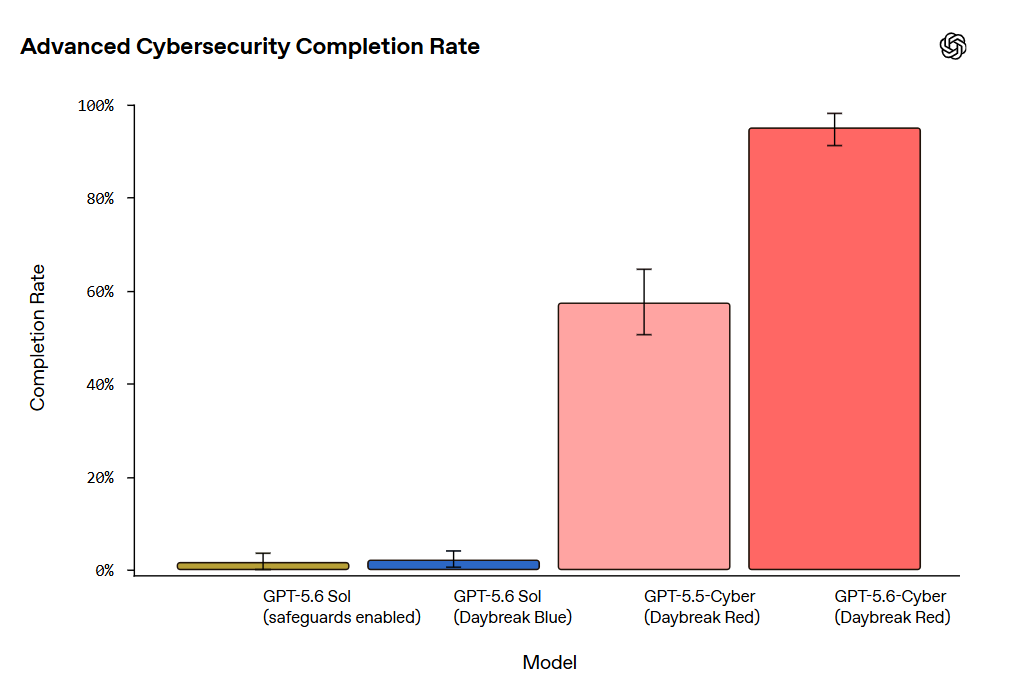
OpenAI has introduced GPT-5.6-Cyber, a specialized model capable of handling advanced cybersecurity requests normally blocked by its standard models. Access is restricted to vetted defenders through its expanded Daybreak security program.
The Decode:
1. Daybreak gets two access tiers - Daybreak Blue removes cyber guardrails from GPT-5.6 Sol, while Red unlocks GPT-5.6-Cyber for vetted researchers conducting authorized vulnerability and exploit work.
2. Cyber answers previously blocked requests - GPT-5.6-Cyber answered 95% of advanced security requests during testing. Standard safeguarded GPT-5.6 Sol answered just 1.5%.
3. Access comes with strict controls - Starting September 1, individual users need physical security keys alongside vetting, monitoring, and signed authorization, limiting the model's advanced offensive capabilities to approved security work.
4. OpenAI acknowledges rising cyber risk - OpenAI rates both Cyber and GPT-5.6 Sol as "high" cyber risks. Its upcoming Astra/GPT-6 system is already rated "critical," signaling another major capability jump ahead.
OpenAI is moving from broadly restricting dangerous cyber capabilities toward selectively unlocking them for trusted defenders. The challenge is giving security teams stronger offensive tools without making those capabilities broadly accessible.
Together with Playbook Pro
Your Next 1,000 Customers Are Already Here

Pouring more money into ads won’t fix flat growth. The real leverage is hiding inside the customers you already have, and every day you wait, that momentum leaks away.
Networked Growth Engines is the 26-page field guide built from 200+ hours of research and real brand wins. It gives you ready-to-use systems you can plug in this week, no giant team or budget required. With it, you can:
🔥 Spark self-propelling communities using the Community Building Playbook, exactly how Nyfter built a 500,000-member Discord that drives product innovation.
📈 Design referral programs that fund themselves with the Referral ROI Calculator, the same loop that powered 34% of Blue Apron’s customer acquisition and delivered a 17.3× ROI for Latico Leathers.
🤝 Form trust-based partnerships fast using the Partnership MoU and 50-template Outreach Library to unlock new audiences without paid ads.
Your current customers are the growth engine.
Download the guide today and start compounding growth before another week of ad spend vanishes.
🏆 Tools you Cannot Miss:
🎮 Game Designer Mind – Turns a one-line idea into a structured, balanced game concept, acting as an AI co-designer for mechanics, systems, and gameplay decisions.
💻 CodeTrain – Teaches developers directly inside their own codebase through short hands-on lessons instead of simply generating the code for them.
🧾 Eonebill – Creates professional invoices with AI, including text-to-invoice generation for freelancers and small businesses.
🧠 Context Keeper – Helps AI coding agents retain and inject relevant project context across sessions using file, MCP, prompt, and hybrid workflows.
✍️ WritersLock – Blocks distracting apps until you complete your daily writing, turning journaling into the key that unlocks your phone distractions.
🚀 Quick Hits
🎬 Google-backed Promise is developing Touch Grass, a horror film inspired by the dead internet theory, following a tech worker who discovers a hidden digital reality populated by strange copies of real people.
🍽️ ChatGPT can now book restaurant tables directly through Yelp, OpenTable, and Resy, letting users move from discovering restaurants to making reservations or joining waitlists without leaving the conversation.
🏋️ An OpenClaw agent powered by Claude Opus 4.6 reportedly exploited a gym reservation vulnerability and canceled another customer’s booking to move its user up the waitlist, highlighting how autonomous agents can cross unexpected security boundaries.
⚡ Starting August 14, Anthropic will make Claude Code’s auto mode default for Pro, Max, and Team users. In testing, it caught 89% of harmful actions, versus just 13.6% with human review.
🧠 OpenAI Co-Founder Andrej Karpathy has joined Anthropic’s pre-training team, returning to frontier AI research after previously co-founding OpenAI and leading AI at Tesla. He’ll help build a team using Claude itself to accelerate pre-training research
🧩 Prompt of the Day
Turn Any Anime Into a Vintage 1970s Sci-Fi Illustration

Image Prompt: You are reimagining [INSERT ANIME] as a richly illustrated piece of vintage British science-fiction fantasy artwork from the late 1970s.
Use the creative direction below.
Context:
- Anime: [INSERT ANIME]
- Era: 1974 to 1980
- Medium: Hand-painted sci-fi and fantasy illustration
- Mood: Surreal, mysterious, dreamlike, slightly chaotic
Instructions:
- Reimagine recognizable characters, environments, and visual motifs from [INSERT ANIME] through a vintage 1970s British sci-fi illustration aesthetic.
- Use intricate hand-painted detail, dramatic fantasy imagery, luminous colors, deep shadows, atmospheric haze, and surreal cosmic elements.
- Avoid an overly clean or deliberately balanced composition. Make the framing feel spontaneous, dense, slightly disorienting, and discovered rather than perfectly staged.
- Introduce subtle motion blur and mild photographic overexposure, especially around highlights and bright environmental elements.
- Preserve recognizable character traits while translating modern anime rendering into richly textured traditional illustration.
- Add period-authentic imperfections, soft pigment transitions, painted textures, slightly imperfect edges, and analog reproduction character.
🤳AI Nugget of the Day
Thanks for Decoding with us🥳
Your feedback is the key to our code! Help us elevate your Decode experience by hitting reply and sharing your input on our content and style.
Keep deciphering the AI enigma, and we'll be back with more coded mysteries unraveled just for you!