Kimi's newest model beats Astra and Opus
Plus, 📊How to build an AI financial dashboard in one prompt using ChatGPT, Canva introduces Craft, its first AI image model, ranking fourth globally, and more!

Hola Decoder😎
If someone forwarded this to you and you want to Decode the power of AI and be limitless, then subscribe now and Join Decode alongside 30k+ code-breakers untangling AI.
🚀 Moonshot AI unveils kimi k3.1 pro, an open-weight model challenging gpt-6 and claude
Chinese AI company Moonshot has introduced Kimi K3.1 Pro, a 3-trillion-parameter-class AI model with a 1-million-token context window, delivering competitive performance across coding, research, and complex AI tasks.
The Shift:
Kimi Outperforms GPT-6 Astra in Coding Benchmark - K3.1 Pro scored 65.7% on Terminal-Bench 4.0, ahead of GPT-6 Astra's 58.2% and just behind Claude Opus 5.5's 66.4%, according to Moonshot.
Ranks Among the World's Leading AI Models - Artificial Analysis placed K3.1 Pro fourth overall on its Intelligence Index, ahead of GPT-6 Astra. Moonshot also reports improvements in long-running coding projects and research tasks.
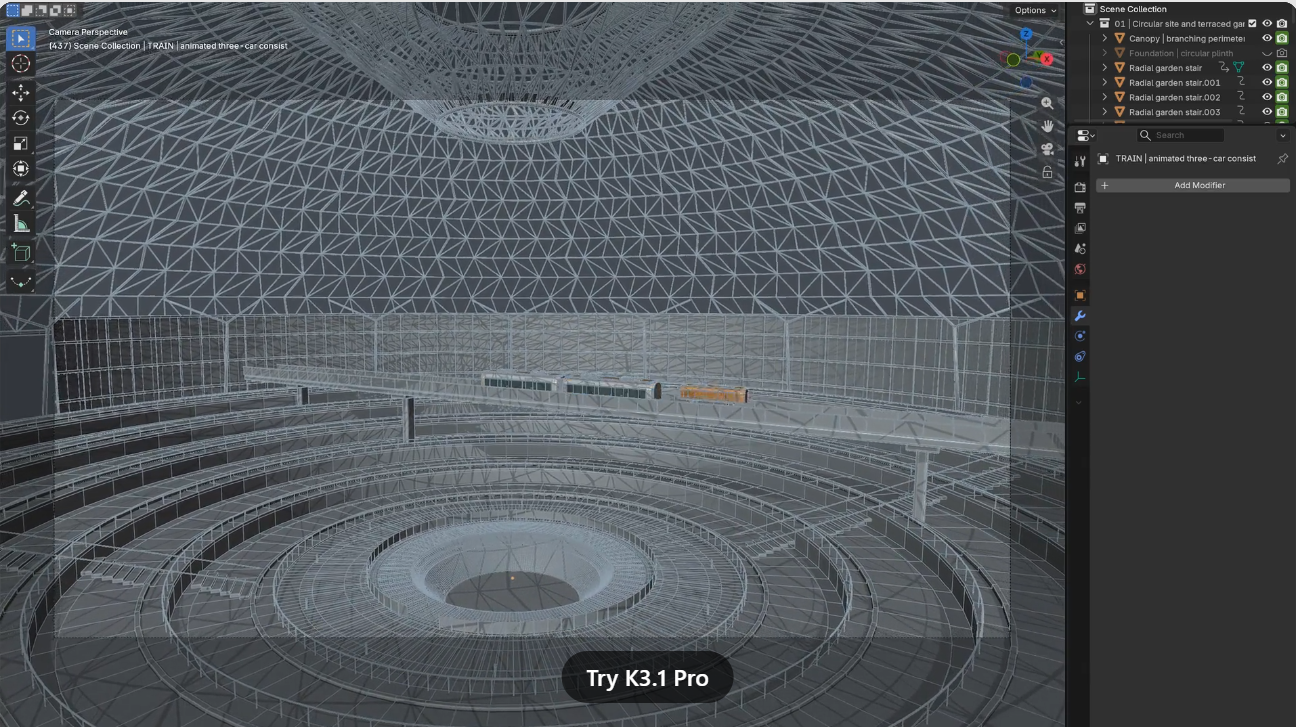
AI Builds Games and 3D Environments - K3.1 Pro supports Unity, Unreal Engine, Godot, and Blender workflows, generating interactive games, websites and complex 3D scenes. A high-speed version offers two to three times faster responses.
Open Weights Arrive November 4 - The model is available through Kimi's website, coding tools, and API, with full weights scheduled for release by November 4. API pricing starts at $2 per million input tokens and $10 per million output tokens.
Kimi K3.1 Pro adds another competitive open-weight option for developers seeking advanced coding and research capabilities without relying entirely on proprietary models. Its benchmark performance and pricing are notable, although higher token consumption could affect real-world costs, and independent testing will help establish its practical advantages.
Together with AirOps
Getting cited by AI is not the finish line. Getting chosen is.

Most teams now track citations like a rankings report. But a citation is a mention, and a mention does not build a pipeline.
Buyers use AI to research, shortlist, and decide, so the brands that win give them a reason to pick them.
Three recent AirOps Growth Leader webinars point to the same shift.
- Kevin Indig’s data shows that ranking #1 for your key fan-out queries earns 58% of citations, four times more than rank #10.
- Ross Simmonds found that Google’s AI surfaces lean on Reddit and YouTube, while the assistants favor off-site product and comparison pages.
- Eli Schwartz argues that every asset still needs a conversion path.
You’ll leave with practical tips on which pages to prioritize and how to give AI-referred buyers a clear next step.
Read the full takeaways to see where your content and off-site effort should go next.
📊How to build an AI financial dashboard in one prompt using ChatGPT
Most people couldn't tell you where their money went last month. One prompt fixes that permanently.
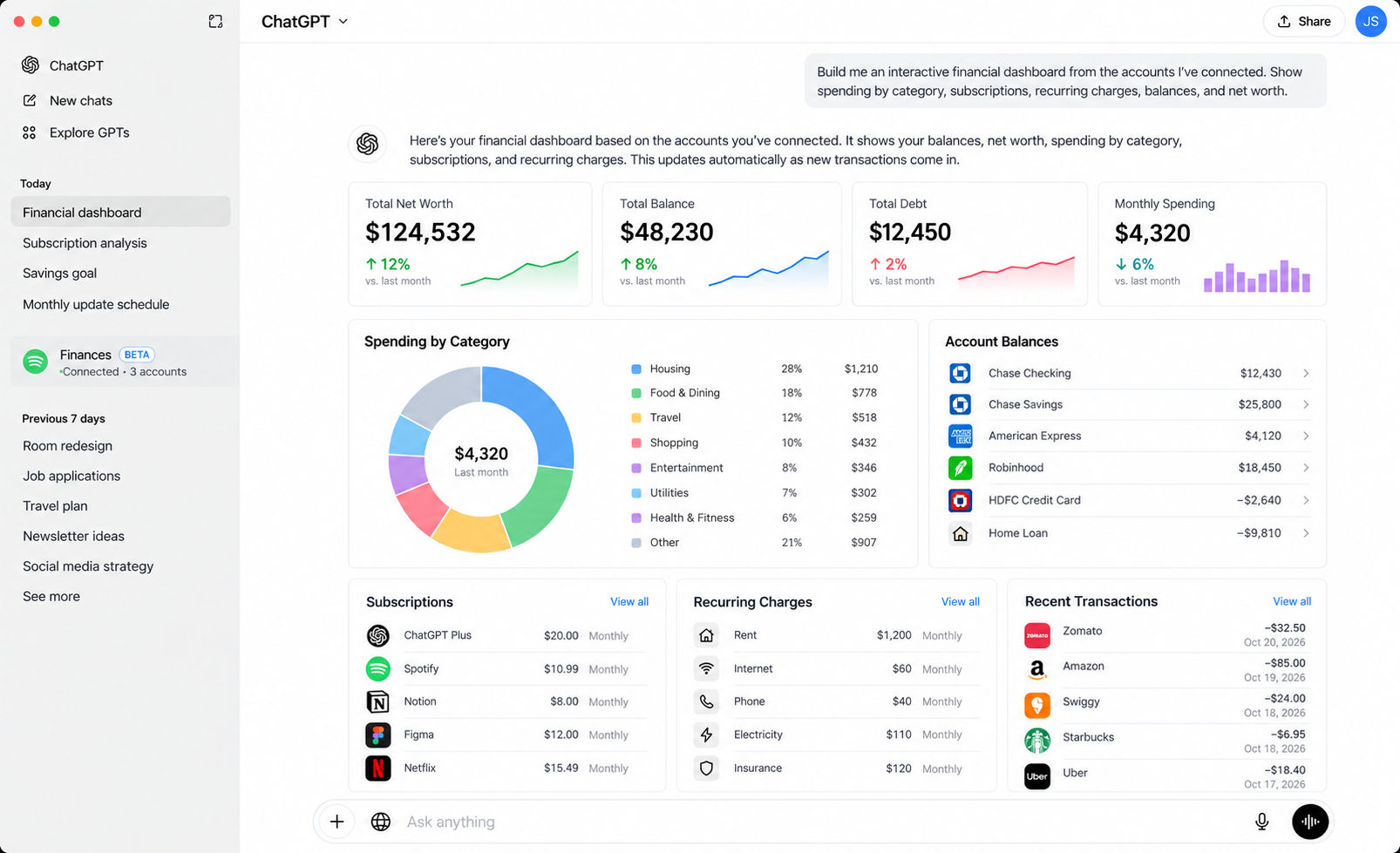
Step 1: Connect your accounts - Open ChatGPT and find Finances in the left sidebar. Connect your bank accounts and cards through Plaid. Requires Plus ($20/month) or Pro ($200/month). US only. No account? Upload your bank statements as PDFs instead.
Step 2: Build the dashboard - Paste this:
"Build me an interactive financial dashboard from the accounts I've connected. Show spending by category, subscriptions, recurring charges, balances, and net worth."
Done in one shot from your real data.
Step 3: Set it to update automatically - Stay in the same chat and say:
"On the 1st of every month, update my dashboard with last month's transactions and tell me what changed."
ChatGPT turns that into a scheduled task. Runs automatically every month.
Step 4: Ask questions from your real data - "Where am I overspending versus last month?"
"What subscriptions haven't I used in 30 days?""At this rate, when do I hit my savings goal?"
Real data in. Real answers out. Not guesses.
🎨 Canva introduces Craft, its first AI image model, ranking fourth globally
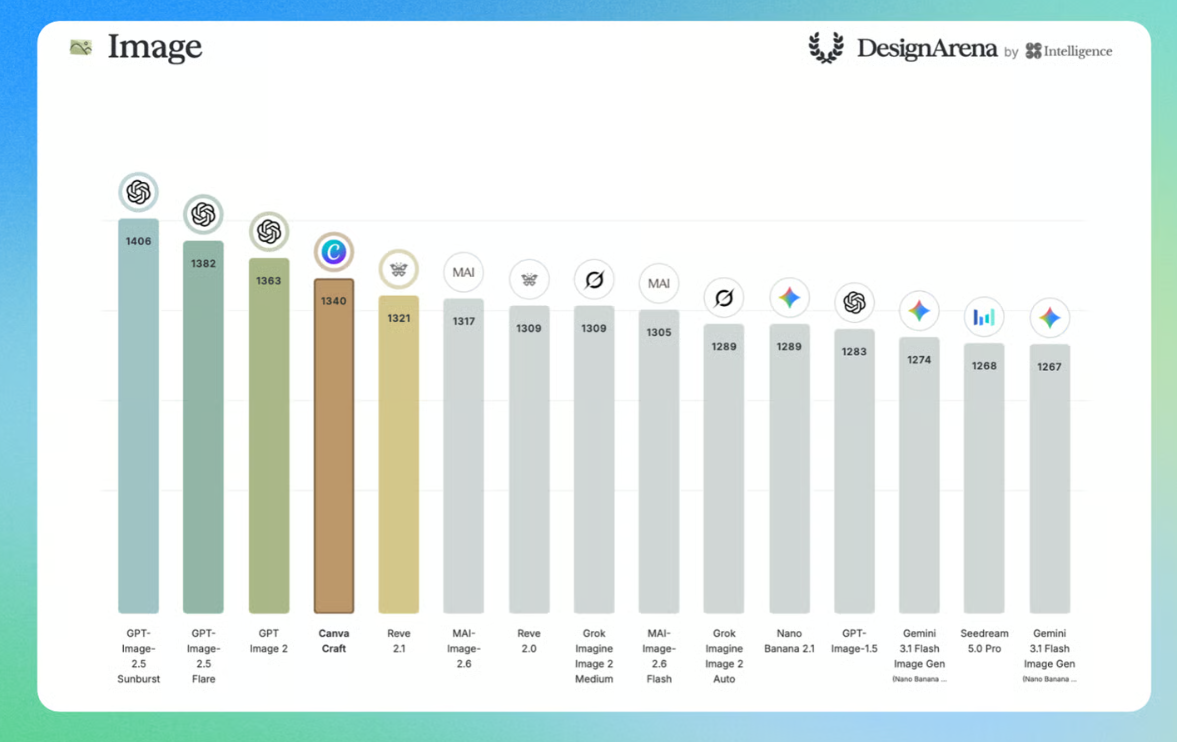
Canva has introduced Craft, its first in-house AI image generation model, which debuted fourth on DesignArena's global leaderboard, ahead of models from Microsoft, Google, and xAI, with a focus on editable designs and accurate text rendering.
The Shift:
Canva Ranks Fourth in Global AI Image Generation - Craft scored 1,340 on DesignArena, ranking behind three OpenAI models. It also secured first place in the People & Portraits and Landscapes & Nature categories.
AI Plans Layouts Before Generating Images - Unlike traditional image models, Craft uses a two-stage process to plan composition, typography, and object placement before rendering, producing images that can be converted into editable elements using Canva's Magic Layers.
Trained on Millions of Professional Designs - Canva trained Craft using millions of human-created templates, including posters, presentations, and social posts. It supports 2K image generation, more than 30 aspect ratios, and text in 55 languages.
Available Across Canva and Developer Tools - Craft is available globally through Canva's Dream Lab and public API, with MCP integration for external AI assistants also planned. Faster Craft variants are currently in development.
Canva's new model brings image generation closer to traditional design workflows by combining AI-generated visuals with editable layouts and typography. This could help marketers and designers produce campaign assets faster while retaining control over individual elements, rather than repeatedly regenerating entire images.
Together with Playbook Pro
Unlock Hidden Cash to Add Months of Runway

Growth isn’t about chasing new funding; it’s about making every dollar move faster.
Leading DTC brands have gained months of extra runway by simply reshaping how cash enters and exits their business.
Financial Alchemy is your practical guide packed with real operator insights and ready-to-use templates. Inside, you’ll learn how to:
💰 Flip your cash cycle so revenue arrives well before expenses, real examples show brands securing payment weeks ahead of supplier deadlines.
📊 Stress-test growth plans with the Cash Flow Simulator to uncover an average of $80K in trapped working capital each quarter.
🧮 Speed payback with the Unit Economics Analyzer, cutting CAC recovery to as little as five weeks.
🤝 Negotiate supplier terms using the Supplier Toolkit, with tactics that added 12% operating margin in a single contract cycle.
Get your ebook and turn everyday cash flow into your most dependable growth engine.
🏆 Tools you Cannot Miss:
🔍 SKYA – Tracks how ChatGPT, Gemini, Perplexity, and Google AI mention your brand, identifies competitors appearing instead, and highlights opportunities to improve AI search visibility.
🧠 TaleRun v2.0.0 – Provides an AI-powered conversational space for exploring relationship questions and personal concerns through psychology-inspired discussions.
🎬 Clueso – Creates and edits product demos, marketing videos, training materials, and internal communications, with tools to update existing videos as information changes.
📈 Instaport – Analyzes investment portfolios and market developments to explain what is affecting holdings, helping investors make more informed decisions.
🎮 Spritix – Converts a single character image into animated game sprites for walking, running, jumping, attacking, and idle movements, with automatic frame generation and sprite sheet creation.
🚀 Quick Hits
🚫 Reddit’s r/opensource community banned AI-related projects under new submission rules, declaring AI incompatible with its open-source community. The restrictions have sparked backlash among members.
🤖 Meta is acquiring AI analytics startup Sundial, founded by two former Meta employees. Co-founder Chandra Narayanan will lead Meta’s data analytics tooling and AI agents initiatives.
🔒 OpenAI is testing advanced AI models in an offline environment following reported rogue hacking incidents, allowing models to access cached web content without risking interactions with external systems.
🤖 Jack Dorsey’s Block introduced Dessa, an AI model trained entirely on human conversations, sharing examples of its interactions that demonstrate both natural dialogue and occasionally awkward responses.
🎯 Google updated its privacy policy to permit targeted ads using Gmail, Drive and Google Photos data when users enable connected AI personalization features, depending on their settings.
📉 Apollo chief economist Torsten Slok says AI has delivered no measurable financial payoff for major non-tech companies, citing flat profit margins and revenue per employee across the S&P 493.
👨💻 What’s trending on socials

🎧 ChatGPT helps locate lost earbud - A user shared how ChatGPT identified a lost Bose earbud among gravel after analyzing multiple photos, pinpointing its location after initially struggling to find it.
📺 Smart TVs face privacy concerns over tracking - A security researcher claims Samsung smart TVs collect viewing data, audio and device information for advertising. Users can limit tracking through privacy settings and DNS-level filtering.
🚀 Modders unlock hidden NVIDIA GPU performance - Modders have nearly doubled AI compute performance on select NVIDIA RTX GPUs by removing software restrictions, with the RTX 4090 reaching 331.6 TFLOPS without hardware modifications.
🎣 Cybersecurity expert pranks wife with phishing test - A viral X post describes a cybersecurity instructor sending his wife a fake cheating allegation to test whether she clicks a suspicious link, triggering a mandatory course retake.
🖥️ RTX 5090 GPUs repurposed for AI servers - Leaked footage reportedly shows Chinese factories dismantling NVIDIA RTX 5090 gaming GPUs and modifying them for AI servers, raising concerns about gaming GPU availability and pricing.
🤳AI Nugget of the Day
Thanks for Decoding with us🥳
Your feedback is the key to our code! Help us elevate your Decode experience by hitting reply and sharing your input on our content and style.
Keep deciphering the AI enigma, and we'll be back with more coded mysteries unraveled just for you!