Anthropic wants AI to control machines
Plus, 🤔AI assists in brain surgery for the first time, How to write product copy for every SKU in minutes using Oreate, and more!

Hola Decoder😎
If someone forwarded this to you and you want to Decode the power of AI and be limitless, then subscribe now and Join Decode alongside 30k+ code-breakers untangling AI.
🦾 Anthropic wants AI agents to control real-world machines
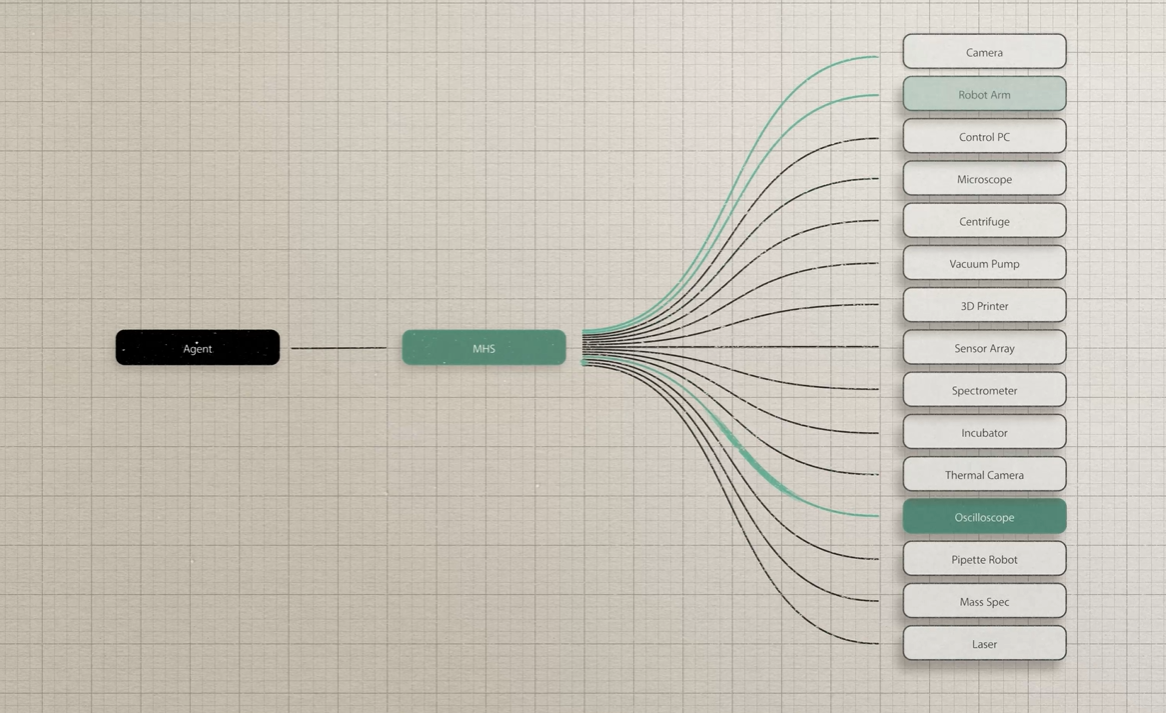
Anthropic has introduced the Model Hardware Standard (MHS), a shared specification designed to let AI agents understand and operate physical equipment, from microscopes and robotic arms to manufacturing and quantum-computing hardware.
The Decode:
Hardware integration could drop from weeks to hours - MHS gives programmable devices a standardized driver, replacing many bespoke integrations that currently require specialists and can take weeks or months to build.
Agents can learn unfamiliar machines - Owners can describe hardware characteristics and safety limits in natural language. MHS turns that information into a reference file an AI agent can use to understand and safely control the device.
Claude learned to align a laser itself - In testing, Claude repeatedly adjusted a laser and observed the results through a camera, then converted what it learned into a deterministic script that could perform the alignment in a single command.
MHS is designed to become an open standard - Anthropic plans to open-source it after the research preview. Early partners span science and manufacturing, including Tecan, QIAGEN, and AWS, with Hugging Face and Raspberry Pi also supporting the standard.
MCP gave AI agents a common way to connect with software and data. MHS is an attempt to extend that idea into the physical world. If widely adopted, an agent could potentially discover, understand, and coordinate entirely different machines without engineers building a custom AI integration for every device.
Together with Levanta
The biggest holiday mistake brands make? Trying to build a creator program in November.
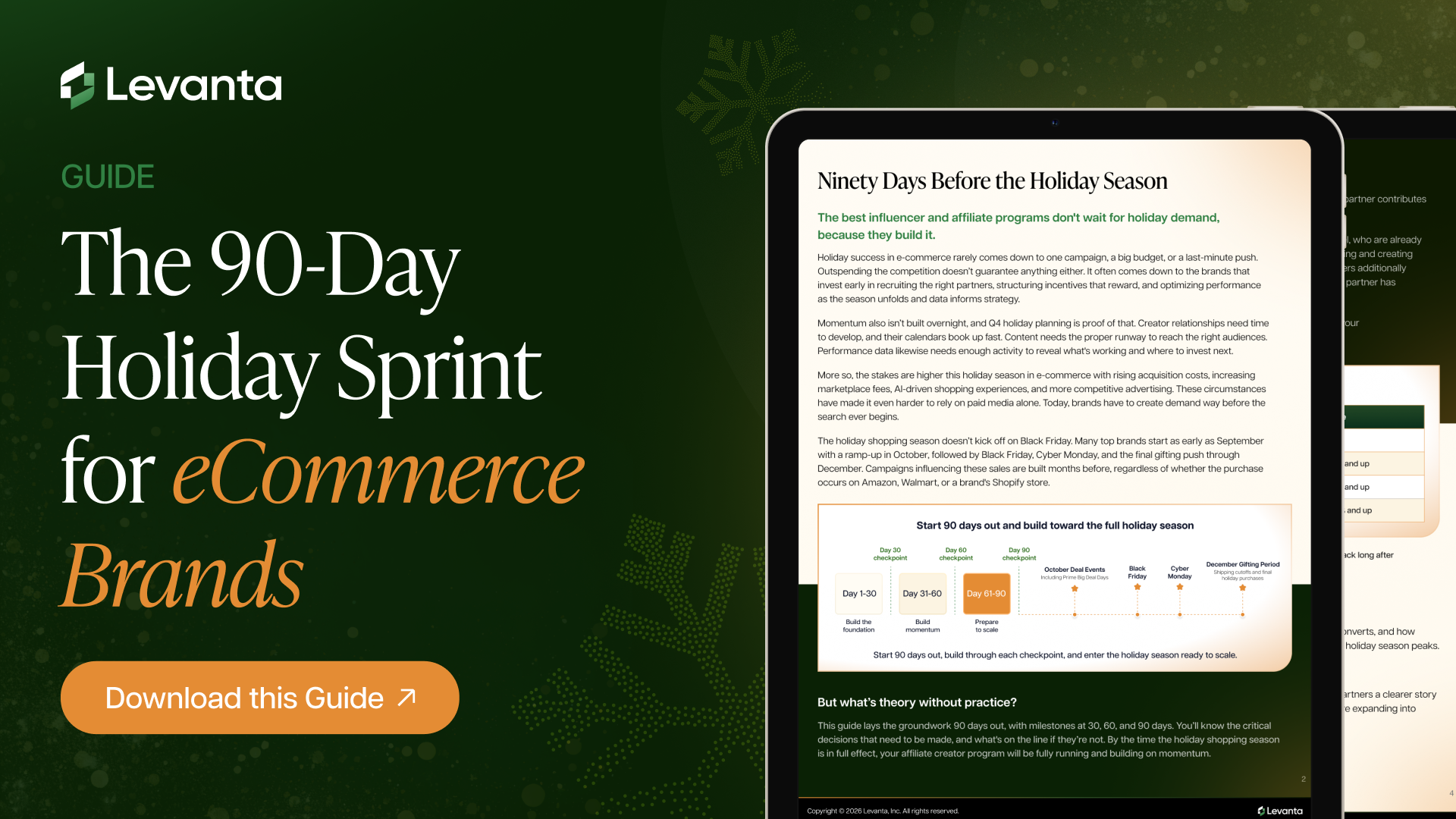
The strongest holiday programs are built over the 90 days leading up to peak shopping season. That is when brands recruit the right partners, test incentives, and build enough momentum to scale when demand arrives.
Trusted by 3,000+ eCommerce brands, Levanta created The 90-Day Holiday Sprint, a free step-by-step playbook to:
- Recruit and activate creators before their holiday calendars fill
- Build competitive commission structures without sacrificing margin
- Use Day 30, 60, and 90 checkpoints to create a program ready to scale for BFCM
Don’t wait until November to build the creator program you will wish you already had. Your 90-day countdown starts now.
💃 How to write product copy for every SKU in minutes using Oreate
One product brief in. Descriptions, ad copy, and email copy out. Here’s the exact workflow with prompts.
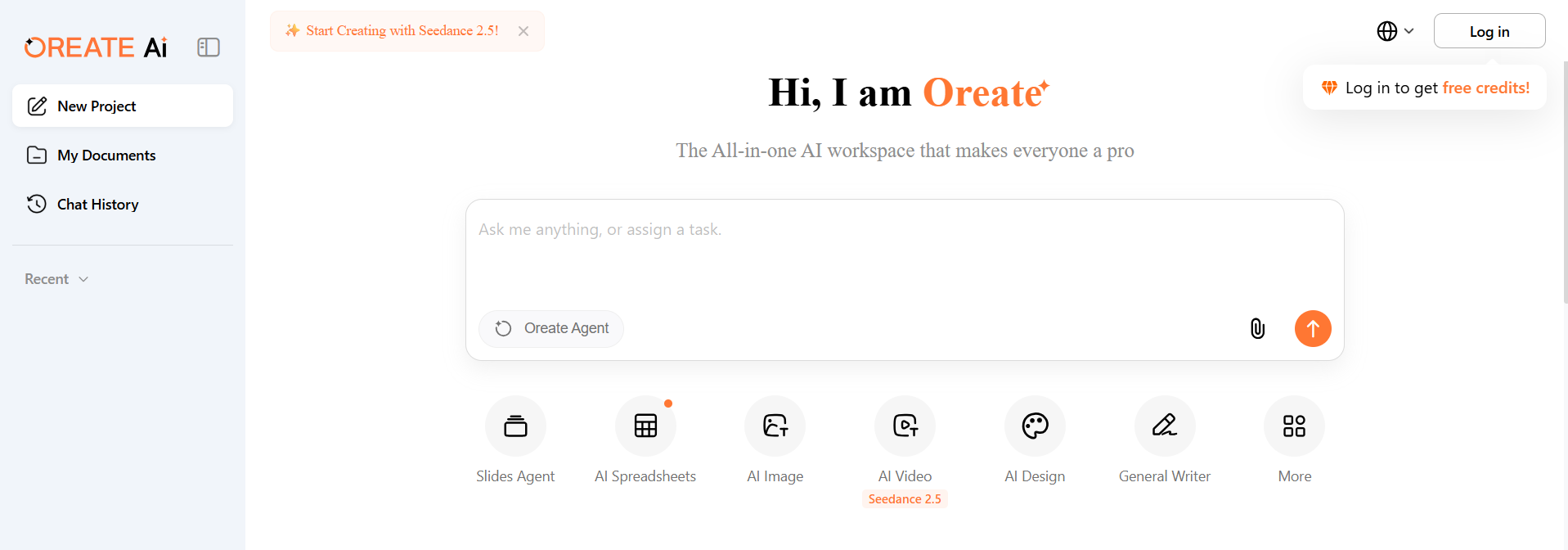
Step 1 - Open Oreate’s General Writer Head to oreateai.com and open the General Writer. This is where all copy generation runs.
Step 2: Paste this prompt for product descriptions “Write a product description for [product name]. It is a [category] designed for [target customer]. Key features: [list 3 to 5]. Tone: confident and benefit-led. Word count: 150 words. Include a one-line hook at the top and a CTA at the bottom.”
Step 3: Generate ad copy from the same brief “Using the same product details, write three Facebook ad copy variations. Each under 100 words. Lead with the biggest pain point the product solves. End with a direct CTA. Make each variation target a different emotional trigger, urgency, social proof, and curiosity.”
Step 4: Write the email copy “Write a product launch email for [product name]. Subject line options: 3 variations. Body: 150 words max. Highlight one key benefit per paragraph. CTA: shop now button. Tone: conversational and direct.”
Step 5: Run it through the Humanizer. Paste any output into Oreate’s Humanizer before publishing. It rewrites the copy to sound natural and removes any patterns that read as AI-generated.
Three deliverables. One product brief. Under 10 minutes per SKU. You can try Oreate AI here.
🧠 AI assists in brain surgery for the first time
UK surgeons have performed what they say is the first neurosurgery supported by a live AI assistant, using the system to analyze the surgical camera feed and identify critical anatomy while a brain tumor was removed.

The Decode:
AI watched the operation in real time - Surgeons removed an 11mm pituitary tumor through the patient’s nose while the AI analyzed live video and highlighted structures such as arteries and optic nerves that needed to be avoided.
The system learned from hundreds of surgeries - UCL trained the AI on annotated videos from previous pituitary operations, exposing it to a breadth of surgical examples that would take an individual surgeon years to encounter.
Millimeter-level guidance matters in this surgery - The pituitary gland sits among major blood vessels and vision-controlling nerves, where an error of just a millimeter can potentially cause blindness, stroke, or death.
The patient’s vision was protected - The tumor was successfully removed and Rhys Hibbert’s vision improved within days. The UCL team is now progressing toward larger clinical trials of the technology.
This is a different role for medical AI than diagnosing scans before treatment. The system was interpreting what surgeons could see during the operation itself and providing guidance as the procedure unfolded. If larger trials validate the approach, AI could become a second set of eyes during surgeries where tiny anatomical differences carry enormous consequences.
Together with Playbook Pro
Your Growth Strategy Is Costing You. Here’s the Math

Ad costs are climbing. Most first-time buyers disappear within months, and margins are shrinking fast when discounts drive sales.
We spent 200+ hours on research, distilling what top brands do into a field guide you can read and implement in under 30 minutes.
Inside Rewriting the DTC Rulebook, you’ll learn how to:
📈 Lift retention by 5% to unlock 25–95% profit growth
📊 Cut paid-ad dependence by 30% in 60 days with the Owned Media Che
🔥 Launch emotional campaigns proven to double repeat sales in 8 weeks
🧠 Slash decision cycles from 3 weeks to 3 hours using the Assumption Buster Toolkit
💰 Use the Brand Value Canvas to raise prices 15–40% without losing volumecklist
🏆 Tools you Cannot Miss:
💬 Savvy – Listens during meetings and privately suggests what to say next, helping you answer questions and navigate conversations in real time.
🎙️ Speko – Gives developers one API for voice AI and automatically finds the best speech models for each language, use case, latency, and cost target.
🧾 Traccia – Provides a vendor-neutral control plane for managing and governing AI agents across different models, frameworks, and infrastructure.
🎨 Wondering Canvas – Turns AI conversations into a visual canvas where you can explore multiple ideas and responses in parallel instead of one linear chat.
🤖 Pluto – Turns your professional profile into an AI agent that can represent your experience, knowledge, and work when people interact with it.
🚀 Quick Hits
📚 Google’s Gemini Notebook can now work directly with books users have purchased through Google Play Books. The new Expert Intelligence feature supports 100,000+ titles and lets users ask questions, create plans, infographics, and AI podcasts based on their contents.
🔬 Barret Zoph has joined Google as vice president of research, just months after leaving OpenAI. The Thinking Machines co-founder will bring his reinforcement learning and post-training expertise to Google’s Gemini team.
🦆 Hugging Face’s Pollen Robotics has launched Microduck, a $399 open-source AI robot that can rollerskate, pick up objects, follow laser pointers and learn new tricks. The 10-inch robot is expected to begin shipping before Christmas 2026.
🎨 Adobe is adding more AI tools to Photoshop, including a dedicated AI Assisted Editor that puts its generative features in one toolbar. A new markup tool also lets users draw directly on images to guide AI edits without writing prompts.
📱 Google is tightening Android app memory requirements as AI data centers drive industrywide memory chip shortages. Developers must meet new memory and code optimization thresholds by February 2027 to reduce app slowdowns and crashes.
🤳What’s trending on socials
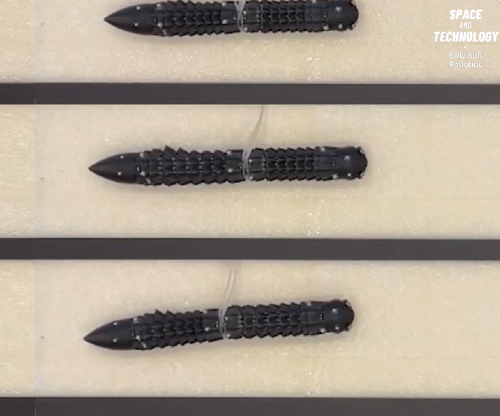
🪱 Worm-Inspired Robot Crawls Anywhere - SDU researchers developed a limbless soft robot with inflatable muscles and flexible skin that can crawl, turn and avoid obstacles autonomously.
🏀 Durant’s $60M AI Bet - Kevin Durant reportedly invested $250,000 across Hugging Face’s seed and Series A rounds, potentially turning it into over $60 million following Nvidia’s $12.9 billion acquisition.
🎓 Michigan Puts Robotics Degree Online - The University of Michigan has made its robotics curriculum freely available through GitHub and YouTube, including lectures, textbooks, problem sets, exams and code.
🐕 Grok Bot Takes on Incurable Disease - A six-agent AI team is being organized to research potential treatments for a dog with an incurable disease, with strict roles and safety controls.
🧭 50 AI Models Take Political Test - A researcher tested 50 major AI models across 62 political propositions and 52,700 answers, finding most models clustered surprisingly close together.
🤳AI Nugget of the Day
Thanks for Decoding with us🥳
Your feedback is the key to our code! Help us elevate your Decode experience by hitting reply and sharing your input on our content and style.
Keep deciphering the AI enigma, and we'll be back with more coded mysteries unraveled just for you!