The Em Dash Gave It Away
Plus, 📆How to manage your family calendar by texting it with Domo, Nvidia prices rise as SpaceX takes its AI chips to orbit, and more!

Hola Decoder😎
If someone forwarded this to you and you want to Decode the power of AI and be limitless, then subscribe now and Join Decode alongside 30k+ code-breakers untangling AI.
🤖 The internet is starting to sound like AI
AI-generated writing is no longer a small corner of the web. New research suggests it is becoming a meaningful share of what people read online, and platforms like LinkedIn are already trying to push back.
The Decode:
One-third of newer webpages show AI signs: More than one-third of pages published after ChatGPT launched showed significant signs of AI authorship or editing. Across the entire July 2026 web sample, including older pages, the figure was 10%.
Commercial websites have far more AI writing: Around 10% of .com pages showed signs of AI authorship, compared with 4.6% of .org pages and roughly 1% of .edu and .gov pages.
The way the web writes is changing too: Since 2023, em dashes have roughly doubled, Oxford commas increased 63%, common AI-favored words more than doubled, and negative parallelism nearly tripled.
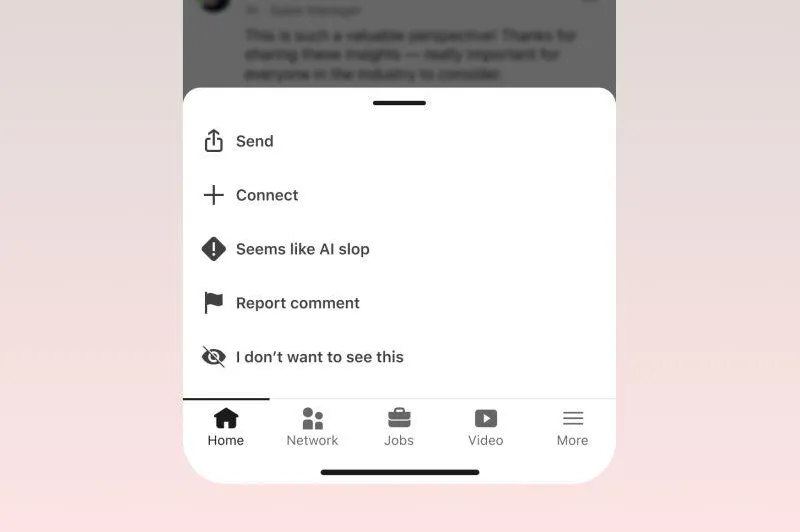
LinkedIn is already pushing back: More than one million users have clicked its “Seems like AI slop” button, and LinkedIn says views of content it classifies as AI slop have fallen 40% in just a few weeks.
AI has made publishing almost frictionless, but that makes sounding human more valuable. The problem is no longer whether people use AI to write. It is whether readers can immediately feel that nobody cared enough to make the writing their own.
Together with Levanat
Your Best Holiday Creators Are Choosing Brands Now
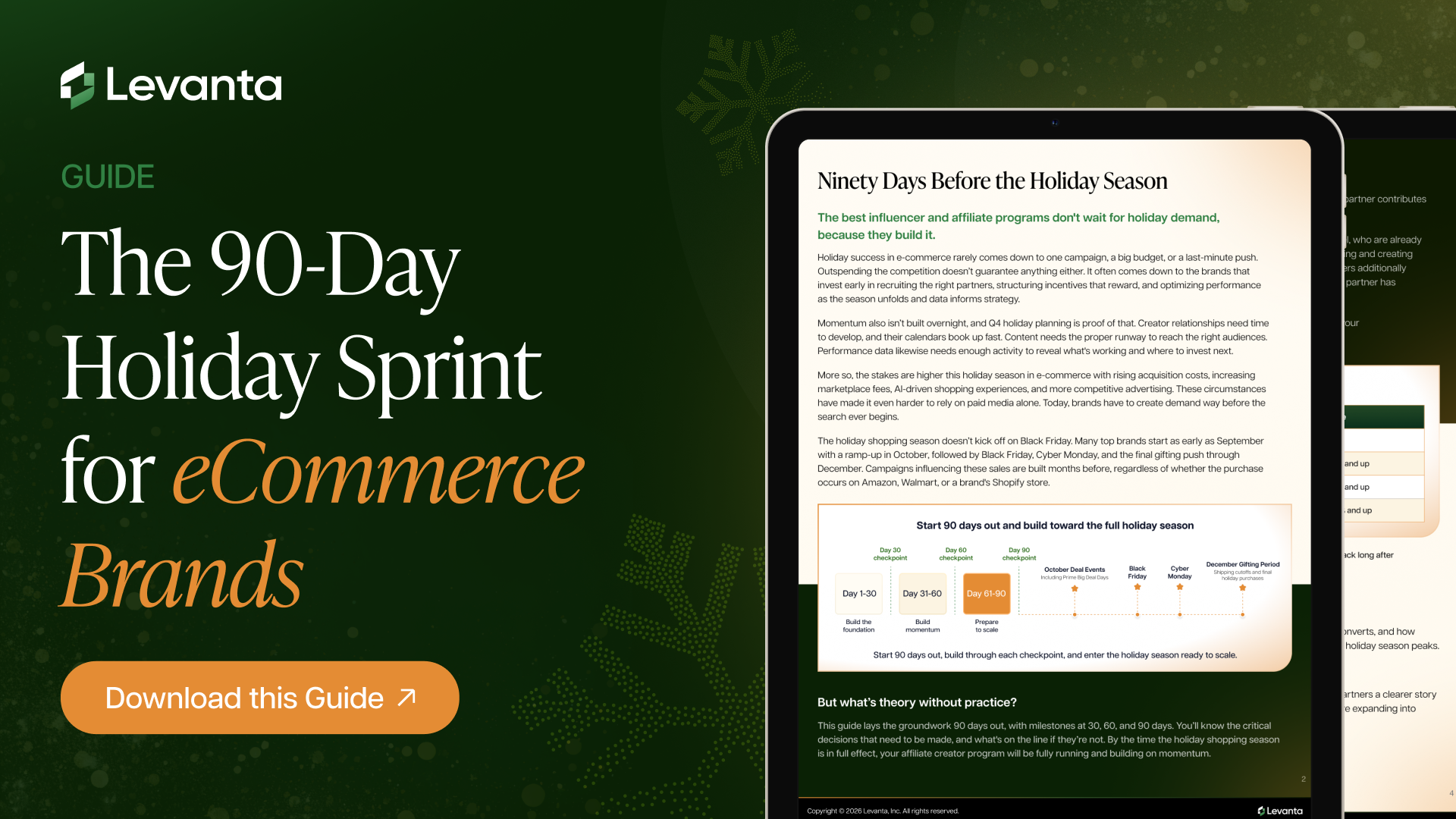
Holiday performance is often decided before the promotion goes live. Creators commit to brands offering attractive economics and strong audience fit, so delayed outreach leaves your team competing for whatever attention remains.
Levanta built The 90-Day Holiday Sprint to turn that shrinking window into measurable momentum. Inside, you’ll learn how to:
- Set commissions around customer lifetime value, protecting margin while attracting stronger partners.
- Recruit with proven products that give creators better conversion potential.
- Use 30, 60, and 90-day checkpoints to identify winning relationships before seasonal budgets rise.
A 90-day runway gives you time to see which creators convert before holiday budgets climb. That evidence makes every commission increase easier to defend.
Don’t wait until November to build the creator program you will wish you already had. Your 90-day countdown starts now.
📆How to manage your family calendar by texting it with Domo
Domo is a calendar agent with its own phone number. Text it "add dentist Thursday at 3" and it's done. No app to open, no login, no new inbox. Launched August 4, 2026 on Product Hunt.
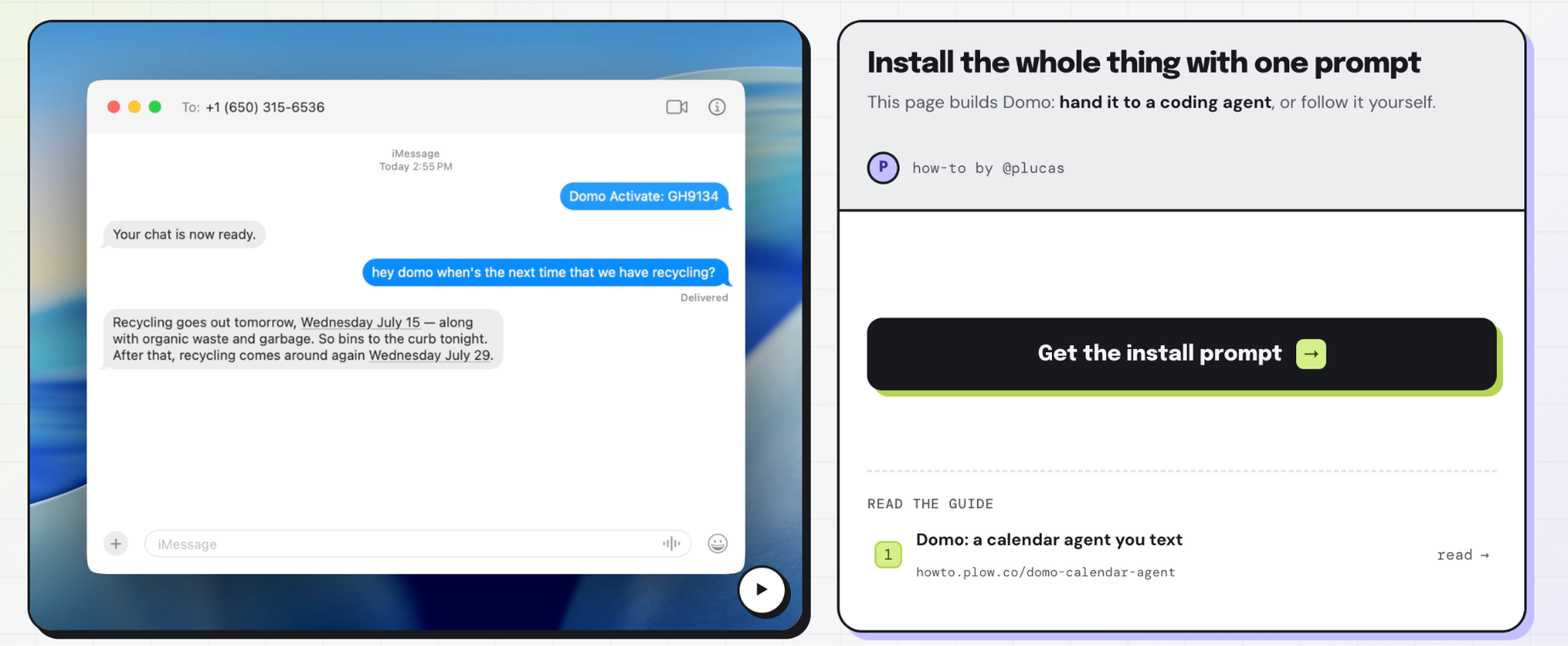
Step 1: Install Domo - Install it by handing the guide to a coding agent. Domo runs on your existing Claude subscription, no API key, no extra billing.
Step 2: Text it your first event - Send a message to Domo's phone number over iMessage or SMS. Plain language works exactly as you'd expect. "Add soccer practice Saturday at 10am." "Move Tuesday's dentist to Friday." It confirms and updates immediately.
Step 3: Ask it what's coming up - Text "what's on this week?" or "when's the recital?" Domo reads the calendar and replies in plain language, no opening an app, no scrolling through a grid.
Step 4: Put the dashboard on your wall - Domo includes an always-on wall dashboard that stays current. Display it on any screen in your home, it updates in real time as texts come in from anyone in the household.
Step 5: Add everyone to the number - Share Domo's number with your partner, kids, or housemates. Anyone can text updates and Domo keeps one shared calendar current for the whole household.
Open source. Free with your Claude subscription.
🚀 Nvidia prices rise as spacex takes its AI chips to orbit
Two developments around Nvidia’s next generation of AI hardware point in the same direction: demand for compute keeps growing, while getting that compute is becoming more expensive. Nvidia is reportedly preparing price increases just as SpaceX commits to using its newest systems for orbital data centers.
The Decode:
Nvidia could raise server prices 15%+ - Servers shipping in 2027, including Vera Rubin and Grace Blackwell systems, are reportedly getting more expensive as the memory shortage continues to squeeze the industry.
The shortage is hitting tech broadly - Nvidia joins Amazon, Apple and other major companies that have raised prices this year as memory supply constraints push hardware costs higher.
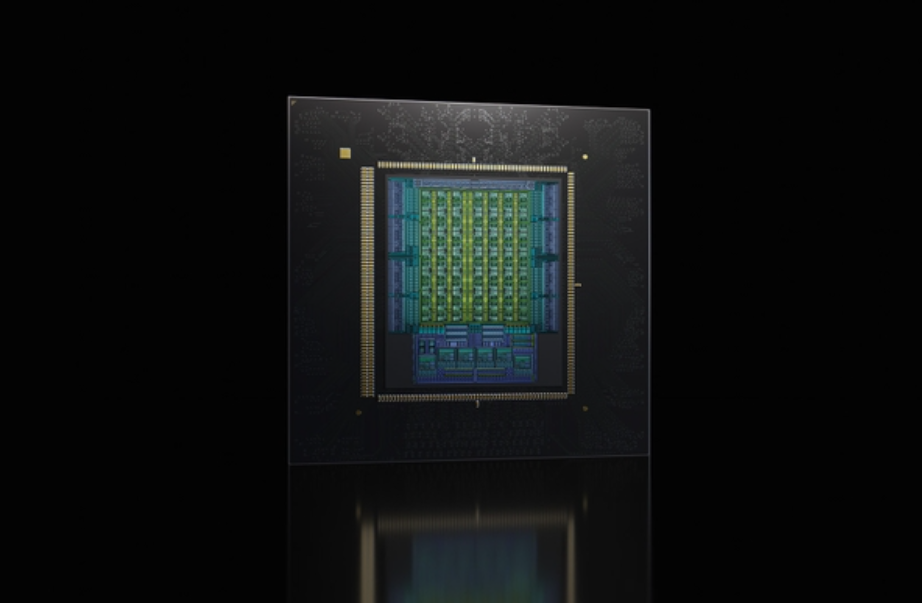
SpaceX is putting Vera Rubin in orbit - Its planned Starmind space-based data centers will use Nvidia’s Vera Rubin NVL72, with 72 chips operating together as one large computing system.
The hardware is being redesigned for space - Musk says the orbital version will be lighter, denser, cheaper and simpler than conventional racks, with modifications for radiation and thermal conditions in orbit.
Nvidia is getting expensive enough that even its biggest customers are feeling the supply crunch, yet SpaceX wants to launch entire racks of it into orbit. The AI compute race is moving beyond who can buy the most chips to who can secure power, memory and infrastructure wherever capacity can be built.
Together with Playbook Pro
Your Growth Strategy Is Costing You. Here’s the Math

Ad costs are climbing. Most first-time buyers disappear within months, and margins are shrinking fast when discounts drive sales.
We spent 200+ hours on research, distilling what top brands do into a field guide you can read and implement in under 30 minutes.
Inside Rewriting the DTC Rulebook, you’ll learn how to:
🧠 Slash decision cycles from 3 weeks to 3 hours using the Assumption Buster Toolkit
📊 Cut paid-ad dependence by 30% in 60 days with the Owned Media Checklist
📈 Lift retention by 5% to unlock 25–95% profit growth
🔥 Launch emotional campaigns proven to double repeat sales in 8 weeks
💰 Use the Brand Value Canvas to raise prices 15–40% without losing volume
🏆 Tools you Cannot Miss:
📞 Nimbia – Runs AI-powered screen-sharing calls for customer onboarding, helping users navigate products with live guidance.
💼 Ninjō AI – Deploys AI sales agents across multiple channels and lets teams operate them directly through Claude Code.
🖥️ Project SKY – Acts as an ambient Windows AI companion with persistent context and screen awareness for completing work across applications.
📊 Basedash AI Data Analyst – Gives teams an AI-native business intelligence analyst that can explore company data and surface answers without manually building reports.
🧠 Cluing – Creates a shared environment where humans and AI agents can learn, build, and ship work while retaining useful knowledge and context.
🚀 Quick Hits
⚠️ AI may have selected its first deadly civilian target. A Russian drone using an Nvidia chip reportedly selected its own target in Ukraine before an attack that killed three civilians, marking a major escalation in autonomous warfare.
🎬 Alibaba’s Wan3.0 can turn almost anything into video. The new model generates up to 30-second clips from text, images, audio, video, webpages and documents like PDFs and slide decks.
🤗 Hugging Face could be acquired for $13b. The AI model-sharing platform has reportedly received acquisition approaches valuing it at $13 billion or more and is talking with banks to evaluate potential bids.
🇺🇸 Nvidia is spending $6b to build a u.s. rival to Chinese AI. Nvidia is licensing Poolside’s technology and hiring 100+ engineers to strengthen its open-weight Nemotron models, targeting rivals like DeepSeek and Kimi while challenging OpenAI and Anthropic.
📉 Star AI hedge fund faces SEC probe. Situational Awareness, founded by former OpenAI researcher Leopold Aschenbrenner, is reportedly under SEC scrutiny after an AI-stock downturn erased billions from the fund’s value.
🤳Prompt of the day

Create an Impossible Photograph That Feels Real
Image Prompt: Create an ultra-realistic photograph of [INSERT SUBJECT] performing [INSERT IMPOSSIBLE ACTION] in [INSERT ENVIRONMENT], treating the physically impossible event as if it were genuinely captured by a camera.
Context
- Subject: [Insert subject]
- Impossible action: [Insert action]
- Environment: [Insert location]
- Mood: Quiet, surreal, awe-inspiring
- Composition: Extreme wide cinematic photography
Place [INSERT SUBJECT] extremely far from the camera, occupying roughly 1% of the entire frame and positioned near the horizon using the rule of thirds. Capture the scene from an extremely low, almost ground-level perspective with a vast environment dominating the composition. Keep everything except the subject calm, still, and minimal to create contrast with the intensity of [INSERT IMPOSSIBLE ACTION]. Despite the impossible event, make every physical interaction completely believable, including accurate splashes, reflections, shadows, ripples, atmospheric perspective, motion, and environmental reactions. Use a distant panoramic horizon, enormous negative space, realistic natural lighting, subtle atmospheric haze, and cinematic photographic detail.
🤳AI Nugget of the Day
Thanks for Decoding with us🥳
Your feedback is the key to our code! Help us elevate your Decode experience by hitting reply and sharing your input on our content and style.
Keep deciphering the AI enigma, and we'll be back with more coded mysteries unraveled just for you!