Google Targets Claude in Coding
💪How to close the gap on competitors in AI search with Semrush, Open-source model now rivals top closed AI systems, and more!

Hola Decoder😎
If someone forwarded this to you and you want to Decode the power of AI and be limitless, then subscribe now and Join Decode alongside 30k+ code-breakers untangling AI.
💻 Google Just Assembled a Strike Team to Take on Claude in Coding
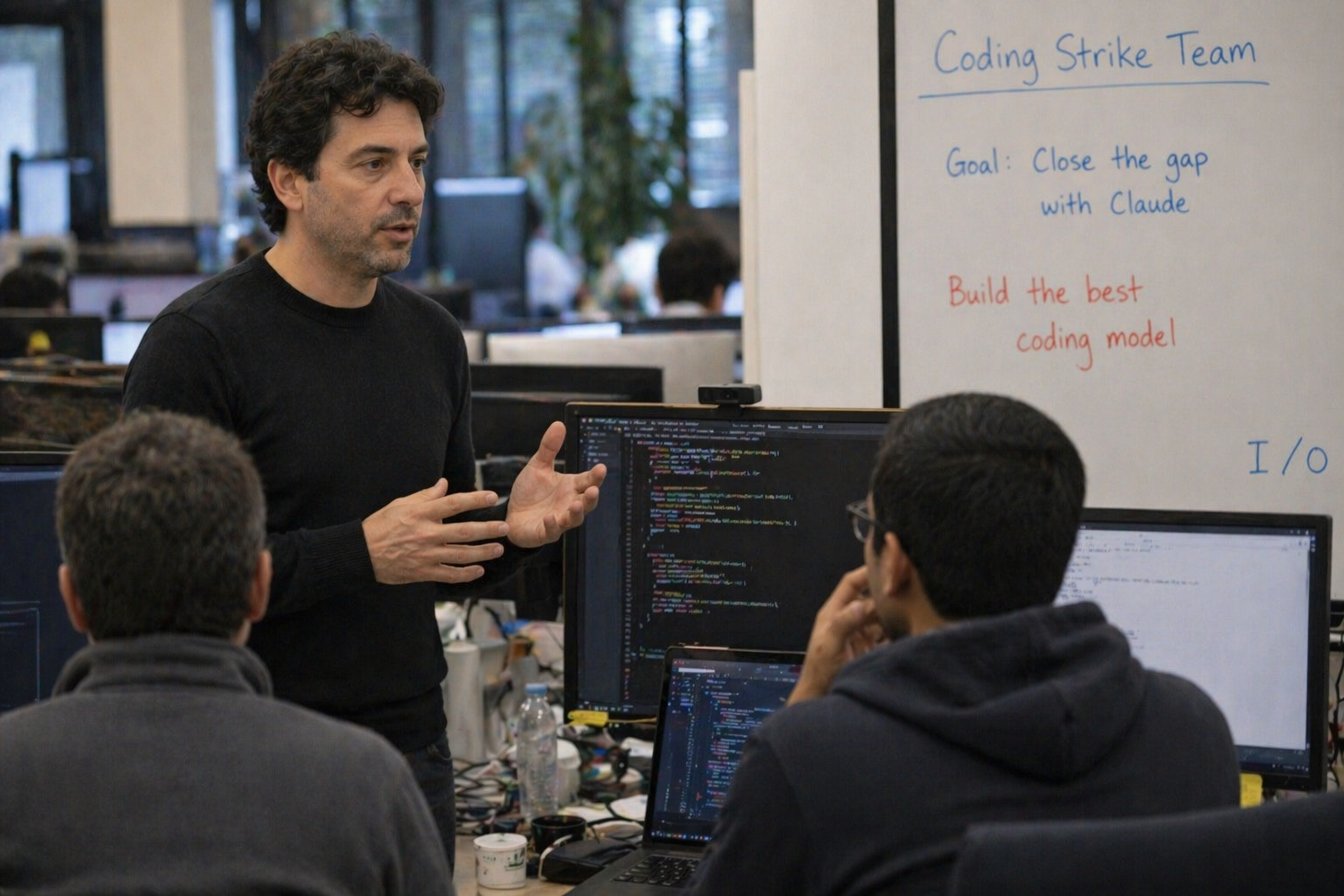
Google is making its most aggressive move yet against Anthropic, assembling an elite Coding Strike Team led by co-founder Sergey Brin to close the gap with Claude in coding performance.
The Decode:
Brin Is Running Point - Sergey Brin is back in the building and personally leading the charge. Research engineer Sebastian Borgeaud, formerly in charge of DeepMind's pretraining, is heading the group alongside CTO Koray Kavukcuoglu.
Why Claude Is the Target - DeepMind's own researchers believe Claude writes better code than Gemini does internally. That internal admission is what triggered Brin's intervention and the formation of a dedicated team to fix it.
The Internal Pressure Is Real - Gemini engineers are now mandated to use Google's internal agent tools on complex tasks. Usage is being tracked on a company-wide leaderboard called Jetski, making adoption a measurable metric, not a suggestion.
The Long Game Is Self-Improving AI - Brin told staff in an internal memo that the real prize is AI capable of training the next version of itself. Coding is the capability that gets Gemini there, and Google I/O on May 19-20 is where the public bet gets placed.
Google and OpenAI are both scrambling to respond to Anthropic's coding dominance. OpenAI shut down Sora and built a Codex superapp. Google brought back its co-founder. Anthropic has quietly become the company everyone else is chasing.
Together with AirOps
ChatGPT judges a page by its cover.
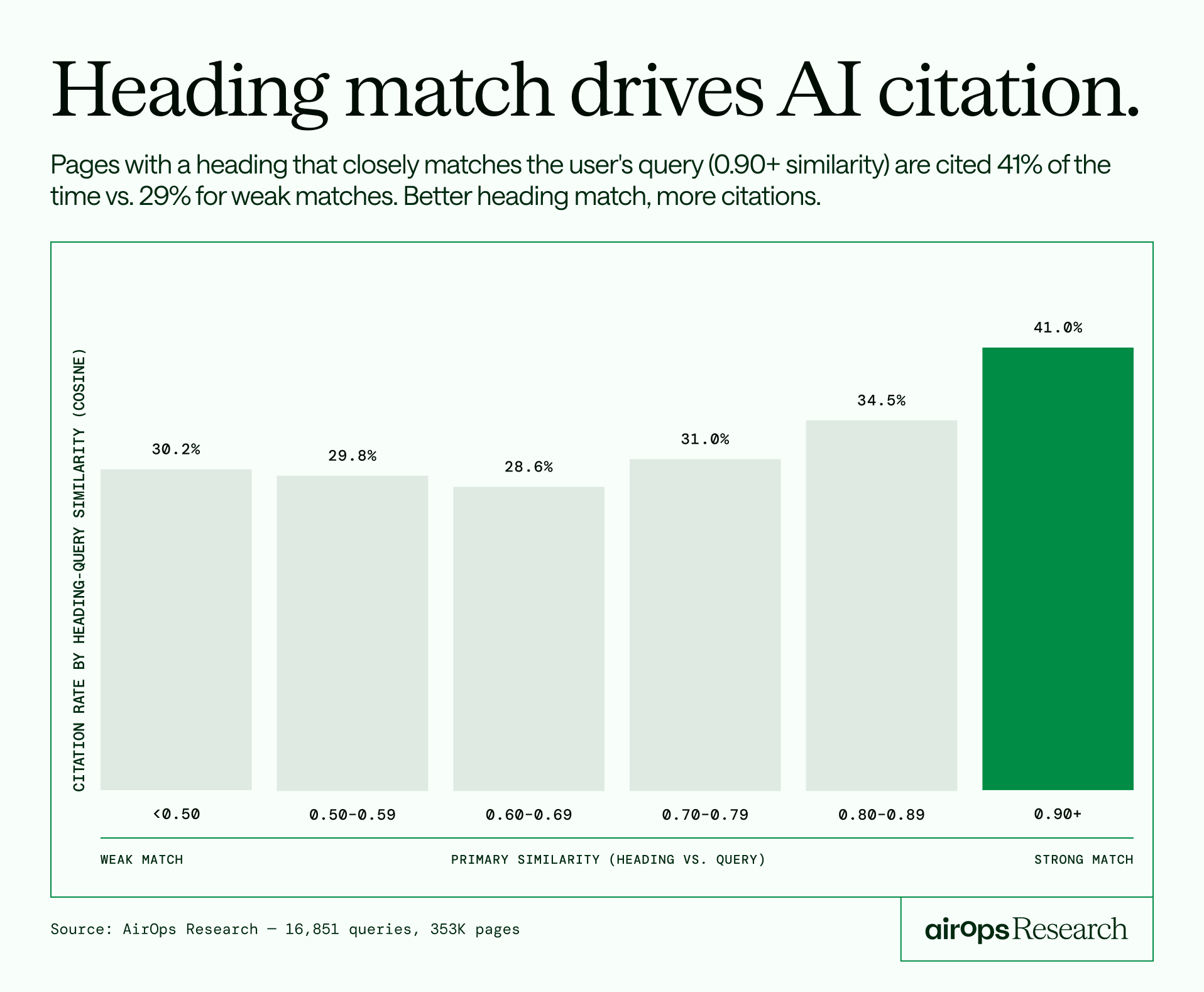
Pages with headlines that directly answer the query get cited 41% of the time. Loosely related headlines? 29%.
AirOps studied 16,851 ChatGPT queries and 353,799 pages across 10 industries to find what separates cited pages from ignored ones. A few findings that stood out to me:
- Retrieval rank is the top signal: A page at position 1 has a 58% chance of being cited. By position 10, that drops to 14%.
- Comprehensive guides don't always win: Pages covering 26-50% of ChatGPT's sub-queries get cited more often than pages covering 100%.
- Domain authority doesn't predict citation: Always-cited pages actually have lower DA than never-cited ones. Content quality is what counts.
The full report covers 20+ signals with controlled comparisons across each.
💪How to Close the Gap on Competitors in AI Search With Semrush
Your competitor is showing up in ChatGPT responses. You’re not. Here’s how to fix that.
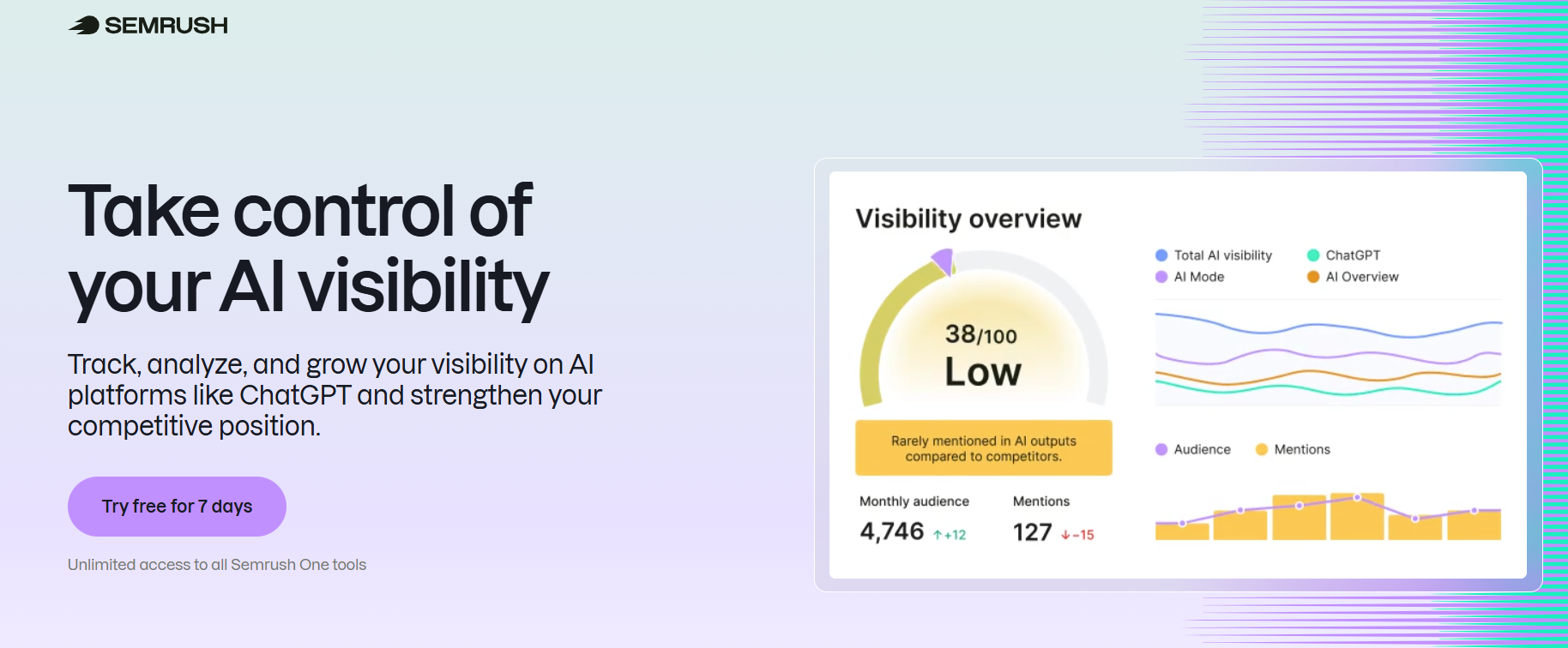
Step 1: See where competitors appear
Enter any competitor into Semrush’s AI Visibility tracker. See exactly which prompts are pulling them up in AI responses and which sources are getting them cited.
Step 2: Find the prompts you’re missing
Semrush surfaces the trending questions people are asking AI in your niche. Cross-reference with where competitors appear; these are your content gaps.
Step 3: Check share of voice
Get a side-by-side breakdown of how often your brand appears versus competitors across AI platforms. This is your competitive baseline.
Step 4: Build content around the gaps
Create content that directly answers the prompts where competitors appear, and you don’t. Structure it to be citation-worthy, clear, specific, and authoritative.
Step 5: Fix your site’s AI-friendliness
Semrush flags technical issues that reduce your chances of being referenced in AI answers. Fix what’s blocking you before creating more content.
Step 6: Track daily and iterate
Monitor your visibility for target prompts in ChatGPT and Google AI Mode daily. Watch the gap close as your content gets picked up.
The brands winning AI search right now aren’t doing anything mysterious; they’re showing up in the right answers to the right prompts. You can try Semrush free for 7 days.
🤖 Moonshot AI Just Open-Sourced a Coding Model That Rivals the Best in the World
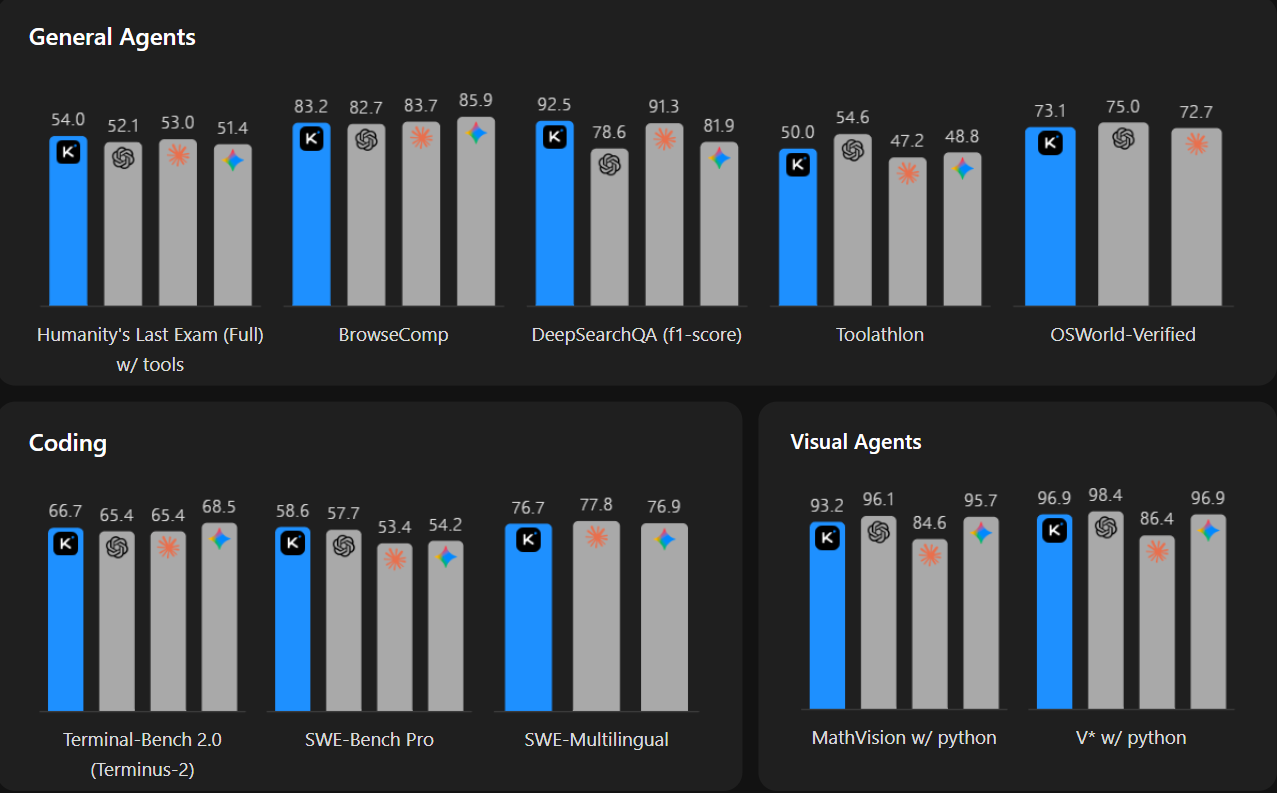
Moonshot AI released Kimi K2.6 this week, an open-source agentic coding model that matches or beats GPT-5.4, Opus 4.6, and Gemini 3.1 Pro on top reasoning and coding benchmarks at a fraction of the cost.
The Decode:
Benchmarks That Turn Heads - K2.6 beats GPT-5.4, Opus 4.6, and Gemini 3.1 Pro on Humanity's Last Exam with tools and SWE-Bench Pro, as an open-source model priced significantly below every closed-source rival it is outperforming.
Built for Long-Horizon Work - K2.6 runs for 12 or more hours straight across 4,000 tool calls. In one demo, it refactored an eight-year-old financial codebase over 13 hours, extracting a 185% throughput improvement.
Always-On Agents Are Already Running on It - OpenClaw and Hermes have both switched to K2.6. One internal Kimi agent reportedly ran autonomously for five days straight, signaling how far long-horizon reliability has come with this release.
Agent Swarms Just Got Three Times Bigger - K2.6 swarms now spin up 300 parallel sub-agents simultaneously, triple K2.5's 100. They coordinate across 4,000 steps at once, delivering complete outputs spanning documents, websites, slides, and spreadsheets in a single run.
Vercel reported a 50% improvement on its Next.js benchmark. CodeBuddy saw a 96.6% tool invocation success rate. The open-source coding race just got a lot more competitive, and the gap between open and closed source models is narrowing fast.
Together with Playbook Pro
Your Next 1,000 Customers Are Already Here

Pouring more money into ads won’t fix flat growth. The real leverage is hiding inside the customers you already have, and every day you wait, that momentum leaks away.
Networked Growth Engines is the 26-page field guide built from 200+ hours of research and real brand wins. It gives you ready-to-use systems you can plug in this week, no giant team or budget required. With it, you can:
🔥 Spark self-propelling communities using the Community Building Playbook, exactly how Nyfter built a 500,000-member Discord that drives product innovation.
📈 Design referral programs that fund themselves with the Referral ROI Calculator, the same loop that powered 34% of Blue Apron’s customer acquisition and delivered a 17.3× ROI for Latico Leathers.
🤝 Form trust-based partnerships fast using the Partnership MoU and 50-template Outreach Library to unlock new audiences without paid ads.
Your current customers are the growth engine.
Download the guide today and start compounding growth before another week of ad spend vanishes.
🏆 Tools you Cannot Miss:
🧑💼 Awesome Hires - Evaluate every candidate consistently with AI so your team only sees the ones who truly fit the role.
🎮 Makko AI - Create game assets and build playable games in your browser from concept art to animation using AI.
🖼️ AdWorker - Remove backgrounds from animated GIFs instantly while keeping smooth, high-quality motion.
📖 Wiki 2066 - Generate future-style Wikipedia pages for any person or character with AI-powered storytelling.
🤖 Betula.ai - An AI assistant that helps professionals and small businesses manage tasks and workflows more efficiently.
🚀 Quick Hits
🤖 Yelp upgraded its AI Assistant to handle recommendations, bookings, and orders in one chat, adding integrations with DoorDash, Grubhub, Vagaro, and Zocdoc, with more features like waitlists and scheduling coming soon.
💰 Amazon is investing $5B more in Anthropic, totaling $13B, while Anthropic commits over $100B in AWS spending over 10 years to secure massive compute capacity for training and running Claude models.
🧠 OpenAI launched Chronicle, a Codex preview feature that runs background agents to capture screen activity and build persistent memory, currently limited to Pro users on Mac.
🛡️ The NSA is reportedly using Anthropic’s Mythos AI for vulnerability scanning, despite the Pentagon labeling Anthropic a supply-chain risk and ongoing tensions over restricted access to its models.
👁️ Tinder and Zoom partnered with Sam Altman’s World to introduce “proof of humanity” badges, using iris scans to verify users and reduce AI bots and deepfake accounts.
🧩 Prompt of the Day
How to Reactivate Dormant Customers and Win Them Back
Most brands ignore inactive users. The smartest ones turn them into the highest ROI segment by re-engaging with the right message at the right time.
Bring customers back before they forget you completely.
Paste the prompt: Drop this into ChatGPT, then fill in your brand and audience.
Create a reactivation campaign for [Insert brand] targeting inactive customers based on defined criteria. Suggest messaging with incentives, reminders, or new value propositions. Recommend outreach channels like email, SMS, and ads. Focus on re-engaging users and driving them back to purchase or interact again.
🤳AI Nugget of the Day
Thanks for Decoding with us🥳
Your feedback is the key to our code! Help us elevate your Decode experience by hitting reply and sharing your input on our content and style.
Keep deciphering the AI enigma, and we'll be back with more coded mysteries unraveled just for you!