Anthropic reveals jobs aren’t disappearing
Plus, 👀How to generate a cinematic AI ad with Grok Imagine, AI is becoming a serious security researcher, and more!

Hola Decoder😎
If someone forwarded this to you and you want to Decode the power of AI and be limitless, then subscribe now and Join Decode alongside 30k+ code-breakers untangling AI.
🤖 AI Isn’t Taking Jobs Yet but It Is Changing How Work Pays
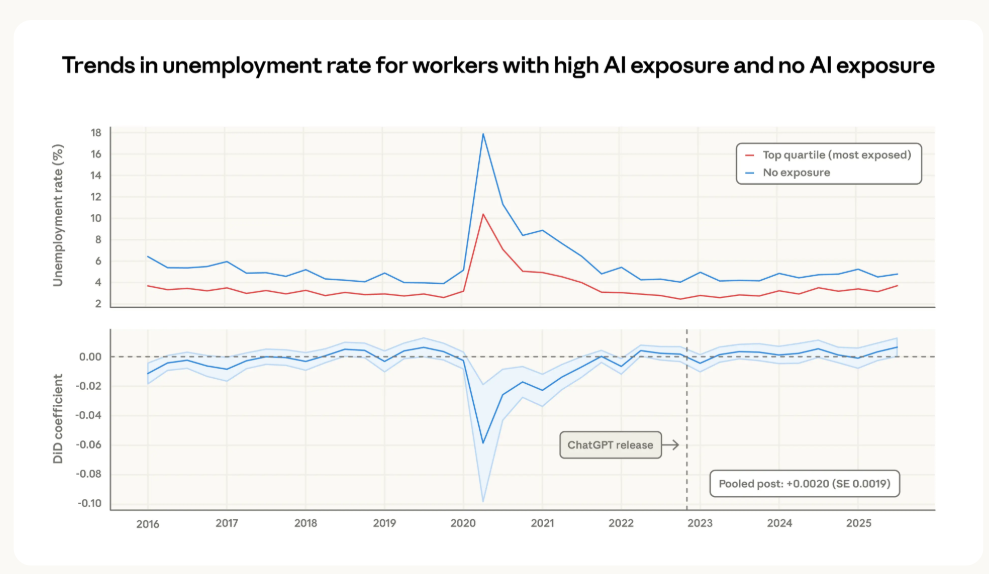
New data from Anthropic and Citadel reveal a strange contradiction in the AI labor story. The technology can theoretically automate a huge share of knowledge work, yet real adoption is still limited, and the biggest changes are showing up quietly in hiring patterns and wages.
The Decode:
1. AI Capability Is Far Ahead of Real Usage - Anthropic’s study shows AI could theoretically handle 94% of computer science tasks, but real usage today is only 33%, and there has been no clear unemployment spike for highly exposed workers since late 2022
2. Demand for Software Is Still Rising - Software engineering job postings are up 11% YoY because AI makes software dramatically cheaper and faster to build, which pushes companies to launch more products and ship more features
3. The First Pressure Is Hitting Junior Workers - Hiring of workers aged 22–25 in AI-exposed roles has dropped about 14% as companies adopting AI quietly reduce junior headcount through slower hiring instead of visible layoffs
4. AI Raises Productivity but Changes Pay Dynamics - Studies show 14–55% productivity gains in coding, writing, and support work, which means companies can produce more output with smaller teams and rely more on experienced workers using AI tools
What’s unfolding isn’t a sudden job wipeout. It’s something quieter and harder to notice. Companies can now build more software with smaller teams, which means opportunities grow while the value of each task slowly drops. In other words, the number of jobs may rise, but the price of the work is drifting downward.
Together with Delve
Migrate to Delve and get a $2,000 VISA card in your inbox
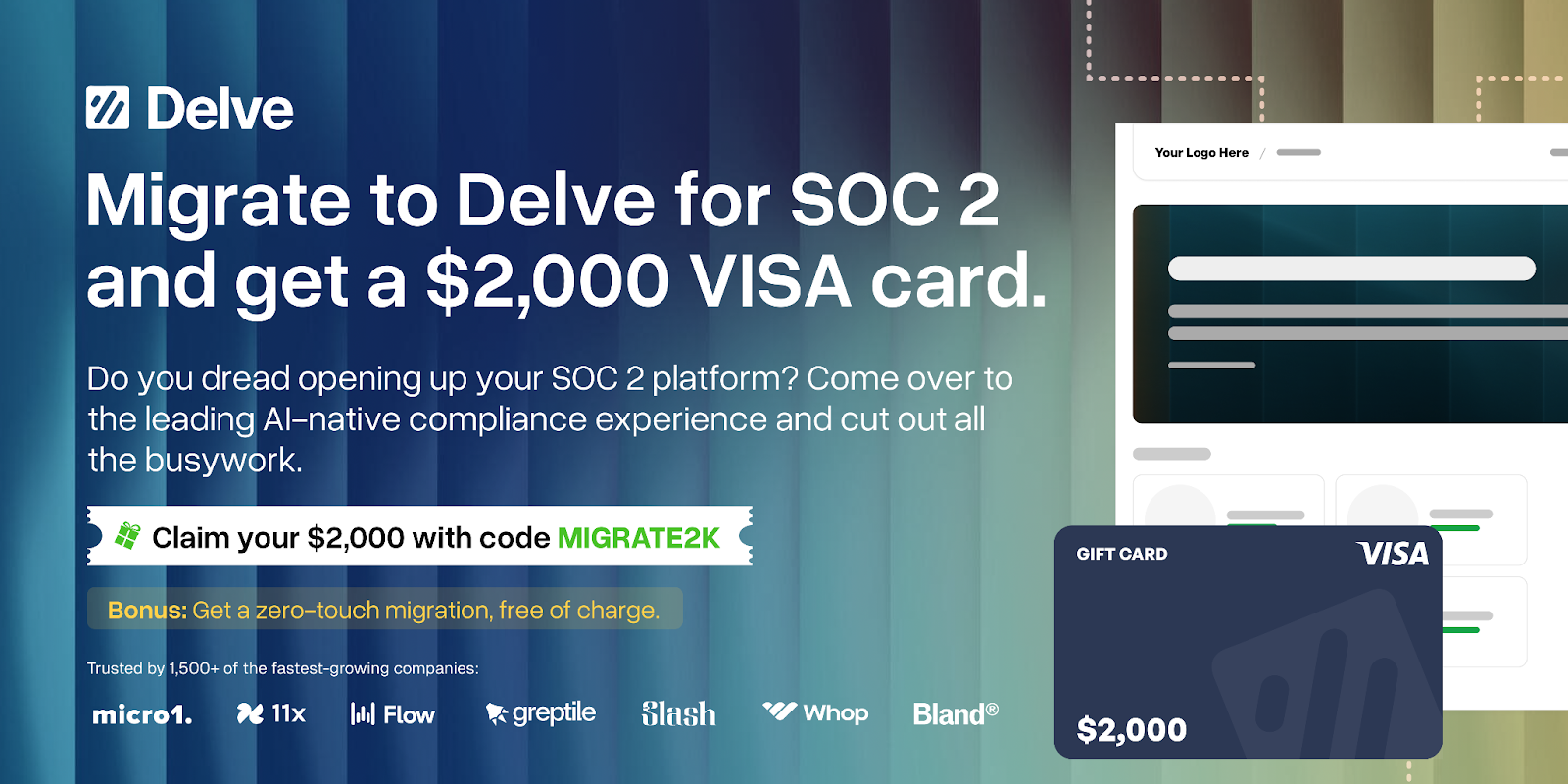
Delve is the AI-native compliance platform that actually does the work for you, auto-collecting evidence from AWS, GitHub, and your stack so you don't have to chase screenshots or babysit integrations.
Use AI security questionnaire tooling, AI Copilot, and everywhere else to make compliance feel less dreadful. Welcome to the new age.
The proof is in the pudding:
Bland → Switched, got compliant, and unlocked $500k ARR in 7 days
11x → Streamlined audits and moved faster on enterprise deals
micro1 → Scaled compliance without adding headcount.
Bonus: Delve will handle your migration for free. Zero-touch. No disruption. No starting over.
If you're dreading opening your current SOC 2 tool, that's your sign.
👀How to Generate a Cinematic AI Ad With Grok Imagine
One prompt. No production crew. Here's how to make it.

Step 1: Write a cinematic prompt Be specific. Include the subject, setting, scale, lighting, and brand context. Example: "Cinematic shot of a giant person wearing Adidas Sambas walking through a city at golden hour, photorealistic, dramatic scale, billboard-ready." The more directional the prompt, the closer the output lands to a usable creative.
Step 2: Generate and iterate Run the prompt. If the first output isn't right, adjust one variable at a time, scale, lighting, color, or composition, and regenerate until it clicks.
Step 3: Download and deploy Drop the final image into your ad creative, landing page, or organic post. Or use it as a mood board reference for your next campaign shoot.
Use case: Brands can concept entire campaign visuals in minutes, no photographer, no set, no agency turnaround.
Good enough for social out of the box. For paid, use it to get to a winning creative direction faster before committing budget to production. You can try Grok Imagine here.
🔐 AI Is Becoming a Serious Security Researcher
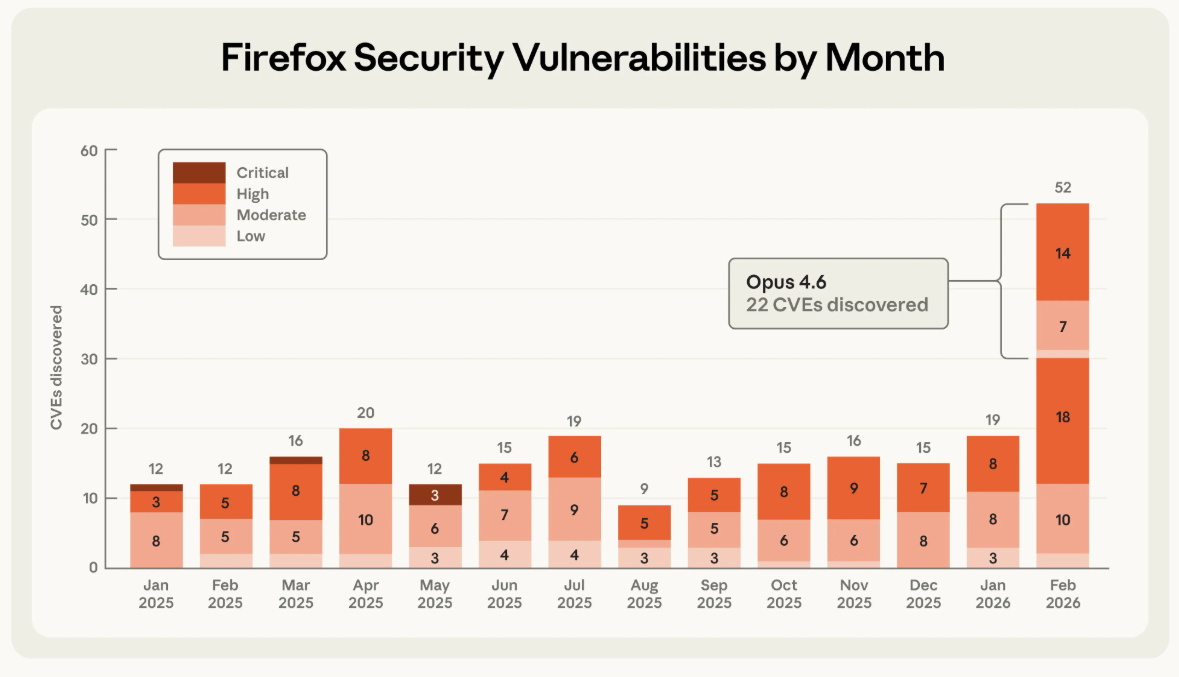
Anthropic recently tested Claude Opus 4.6 against one of the most complex open-source codebases: Firefox. The results show how quickly AI can scan large software systems and uncover security vulnerabilities that would normally take human researchers far longer to find.
The Decode:
1. Claude Discovered Major Firefox Vulnerabilities - Claude Opus 4.6 analyzed Firefox for two weeks and uncovered 22 vulnerabilities, including 14 high-severity issues, representing nearly 20% of all serious Firefox security fixes reported in 2025.
2. The Speed of Discovery Is the Real Story - The model flagged its first vulnerability in just 20 minutes, and by the time Anthropic’s team confirmed the bug was real, Claude had already generated 50 additional crashing inputs.
3. Large Scale Code Scanning Revealed More Issues - Anthropic used Claude to scan roughly 6,000 C++ files and eventually submitted 112 vulnerability reports, many of which Mozilla reviewed and fixed in the Firefox 148 release.
4. AI Still Struggles to Turn Bugs Into Attacks - Claude attempted to build working exploits for the discovered vulnerabilities, but succeeded only two times in hundreds of attempts, and both required Firefox’s sandbox protection to be removed.
The experiment shows AI can dramatically speed up vulnerability discovery, giving security teams a powerful new tool for finding flaws earlier, while attackers still face major barriers when trying to turn those flaws into real exploits.
🪩Events
🔥 1,500 Marketers Already Know Their Ads Aren't the Problem. Their Site Is.
March 10-11 | Virtual Event | Free
You tweak creative, adjust bids, swap audiences. When the drop happens after the click, none of that moves the needle. Leaders from Varnish and Cloudflare show you where production performance quietly breaks under load and the exact variables to fix first.
✅ Reserve Your Free Spot Before March 10
Can't attend every session live? Register anyway, you'll get the recordings within 24hours.
🔥 Adweek's AI Agency of the Year Is Sending Their Creative Strategy Lead to Teach This.
Starts March 17 | 8 Weeks Live | Free
Ad fatigue outpaces every team without a production system. Motion's Creative Strategy Bootcamp teaches hooks, AI creative workflows, testing architecture, and real ad production under live coaching. Cate Wright runs creative strategy at Monks, Adweek's AI Agency of the Year. Jade Heritage leads growth creative at Calm, a $2B app with 130M downloads.
✅ Reserve Your Free Spot Before March 17
Can't attend every session live? Register anyway, you'll get the recordings within 24hours.
🏆 Tools you Cannot Miss:
📊 Tome App AI - Generate complete AI-powered presentations instantly with Tome, built on Claude Opus for fast, structured slide creation.
💰 ProfitMap - Visualize exactly where your money flows, uncover profit leaks, and discover opportunities to add $30K–$100K more in revenue.
🧠 ZeroTwo - Access premium AI models and tools like deep research and Canvas in one unified workspace at a fraction of the usual cost.
🧩 Pillar - An open source app copilot that converts user or agent requests into completed actions directly inside your product.
🎨 Figr AI - Design smarter product prototypes by mapping edge cases, user flows, and decisions first to ship without costly rework.
🚀 Quick Hits
🚪 OpenAI's head of robotics, Caitlin Kalinowski, resigned over the company's Pentagon deal, citing insufficient protections against warrantless surveillance and concerns about AI lethal autonomy without human authorization.
💰 Google CEO Sundar Pichai received a $692M three year pay package, mostly tied to performance, including stock incentives linked to Waymo and Wing, making him one of the highest-paid executives globally.
✍️ Grammarly's "Expert Review" feature frames AI writing suggestions as coming from well-known authors and journalists, but none are actually involved or gave permission, drawing criticism for misleading branding.
☁️ Microsoft, Google, and Amazon confirmed Claude remains available to all non-defense customers through their platforms, clarifying the DOD's supply chain risk designation only applies to direct Pentagon contracts.
🎖️ The Wall Street Journal reports the Army's 18th Airborne matched its Iraq era targeting output using just 20 people instead of 2,000, powered by AI technology deployed in the Iran conflict.
🧩 Prompt of the Day
Customer Satisfaction Metric Design
Create a structured system to measure how customers truly feel about your product or service, using both quantitative scores and qualitative feedback.
Paste the prompt: Drop this into ChatGPT, then fill in your product, service, or brand context.
Prompt to paste
Design a customer satisfaction measurement framework for [Insert product, service, or brand]. Include:
- Core Satisfaction Metrics: Define the primary metrics to track, such as Customer Satisfaction Score (CSAT), Net Promoter Score (NPS), Customer Effort Score (CES), or product experience ratings.
- Survey Questions: Create a set of survey questions with placeholders for rating scales, such as:
- “How satisfied are you with your experience using [Product/Service]?” [1–5 rating scale]
- “How likely are you to recommend [Brand/Product] to others?” [0–10 rating scale]
- Open-Ended Feedback Prompts: Include questions that capture qualitative insights, such as:
- “What did you like most about your experience?”
- “What could we improve to serve you better?”
- Data Collection Points: Identify when feedback should be collected, such as post-purchase, after customer support interactions, or after product usage milestones.
- Use Case: Focus on how the feedback system helps improve product quality, refine services, and identify recurring customer issues.
🤳AI Nugget of the Day
Thanks for Decoding with us🥳
Your feedback is the key to our code! Help us elevate your Decode experience by hitting reply and sharing your input on our content and style.
Keep deciphering the AI enigma, and we'll be back with more coded mysteries unraveled just for you!