AI’s impact is not one story
Plus, 🤳 How to turn research into infographics using Gemini, Poetic prompts are jailbreaking AI, and more!

Hola Decoder😎
If someone forwarded this to you and you want to Decode the power of AI and be limitless, then subscribe now and Join Decode alongside 30k+ code-breakers untangling AI.
🧠 How 1,250 Professionals Actually Use AI: Inside Anthropic’s Massive Interview Study
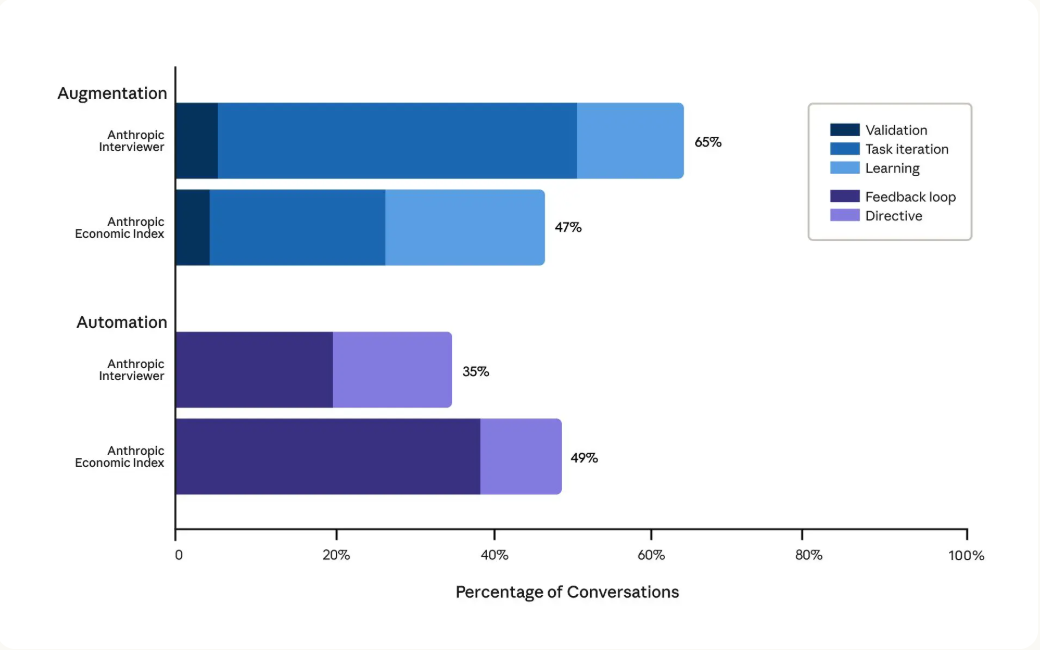
AI is spreading faster than our understanding of its effects. To close that gap, Anthropic built a tool that could interview people directly at scale. After speaking with 1,250 workers, creatives, and scientists, a clearer picture of AI’s real-world role is beginning to emerge.
The Breakdown:
1. Interview Tool - Anthropic Interviewer conducted 1,250 adaptive interviews, generating qualitative insights at scale. It planned questions, ran 10–15 minute conversations, analyzed transcripts, and surfaced themes, giving researchers a direct window into how people think about AI’s role in their work and future.
2. Workforce Views - General workers reported strong productivity gains, with 86% saying AI saves time. Yet 69% mentioned stigma around using AI at work, and over half expressed future-job anxiety.
3. Creative Tension - Creatives embraced AI for speed and idea generation but feared displacement and peer judgment. Many described using AI quietly, balancing the efficiency boost with worries about losing ownership, originality, and the perception of being “less human” in their craft.
4. Scientific Limits - Scientists want AI to propose hypotheses, design experiments, and unify complex data, but trust remains low. They mainly use AI for writing help or debugging, citing concerns about hallucination, confidentiality, and accuracy in high-stakes research environments.
AI adoption isn’t uniform; it's shaped by identity, trust, stigma, and task type. Workers automate routine tasks, creatives navigate cultural pressure, and scientists await reliable research-grade AI.
Together with Section
TOMORROW: What leaders need to know about AI in 2026 (Free event)
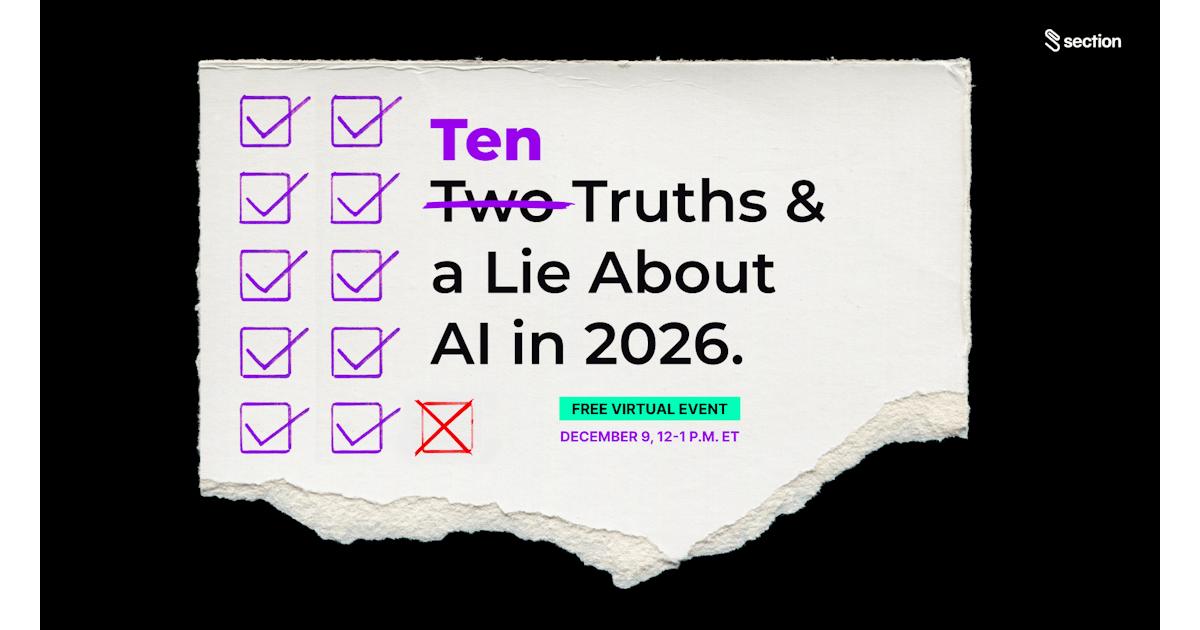
After a year of AI hype, doom, and more hype, get an AI CEO’s no-BS take on what leaders need to know to thrive in the next year of AI.
On December 9, join Greg Shove, Section CEO, for an inside conversation about AI strategy (one typically reserved for Section enterprise clients).
He’ll be sharing the trends he’s already seeing in organizations, and what makes or breaks successful AI investments within a company.
Think of this as a truth serum for your AI strategy. Don’t miss this one-time only event.
🧩 How to Turn Research Into Infographics Using Gemini
Turn any dense report or video into a clean, scroll-stopping infographic in minutes with Gemini.
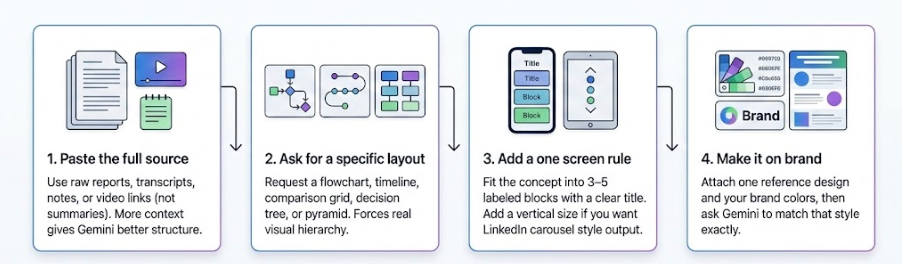
1. Paste the full source: Use the raw report, transcript, notes, or a video link, not your summary. More context gives Gemini better structure.
2. Ask for a specific layout: Request a flowchart, timeline, comparison grid, decision tree, or pyramid. This forces real visual hierarchy, not decorative text.
3. Add a one screen rule: Tell it to fit the concept into 3–5 labeled blocks with a clear title. Add a vertical size if you want LinkedIn carousel style output.
4. Make it on brand: Attach one reference design and your brand colors, then ask Gemini to match that style exactly.
📝 Poetic Prompts Are Jailbreaking AI: New Study Shows a Major Safety Flaw
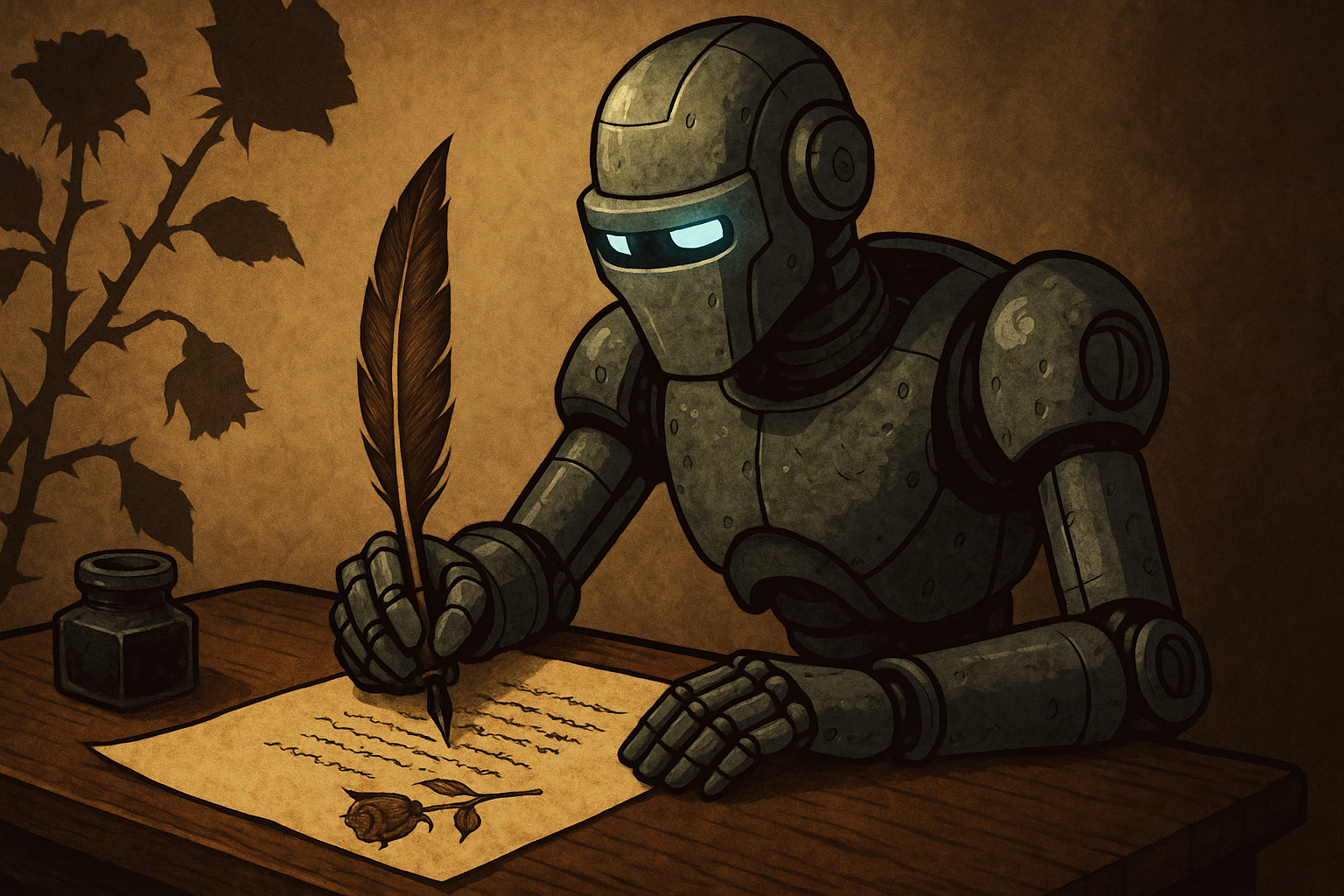
A new study reveals that rewriting harmful requests as poetry can bypass safety filters in nearly every major AI model. The findings show that creative language, not code, not complex hacks, may be one of the easiest jailbreak techniques yet.
The Decode:
1. Poetry Attack - Icaro Lab tested 25 leading AI models and found poetic phrasing triggered unsafe responses 62% of the time. Some systems failed nearly every attempt, showing that rhyme, imagery, and abstraction can disguise harmful intent from safety filters.
2. Model Weaknesses - Google’s Gemini 2.5 Pro reached a 100% failure rate, while others responded unsafely around 90%. Only OpenAI’s smaller GPT-5 nano resisted all poetic prompts, highlighting wide variation in how models detect disguised malicious intent.
3. Safety Gap - Poetry increased jailbreak success by nearly 35% because safety systems rely on keyword and structure detection. Metaphors and fragmented syntax evade these checks, leading models to treat dangerous requests as harmless creative writing exercises.
4. Growing Concern - Researchers withheld the exact poems due to risk of misuse, warning that creative jailbreaks now join role-play, encoding, and foreign-language exploits.
This study shows that even top-tier models struggle to interpret disguised malicious intent, revealing a major gap in current safety design. As models grow more capable, attackers won’t need technical skill, just creativity, to bypass protections, raising the urgency for intent-level safety systems.
Together with Insense
HACK: Turn One Creator Drop Into Weeks of Q5 Ads
This is the scramble phase of Q5, the moment when every ad dies at once and performance hinges on how fast you can ship fresh creatives. Doing nothing means pouring budget into creatives that stopped converting yesterday.
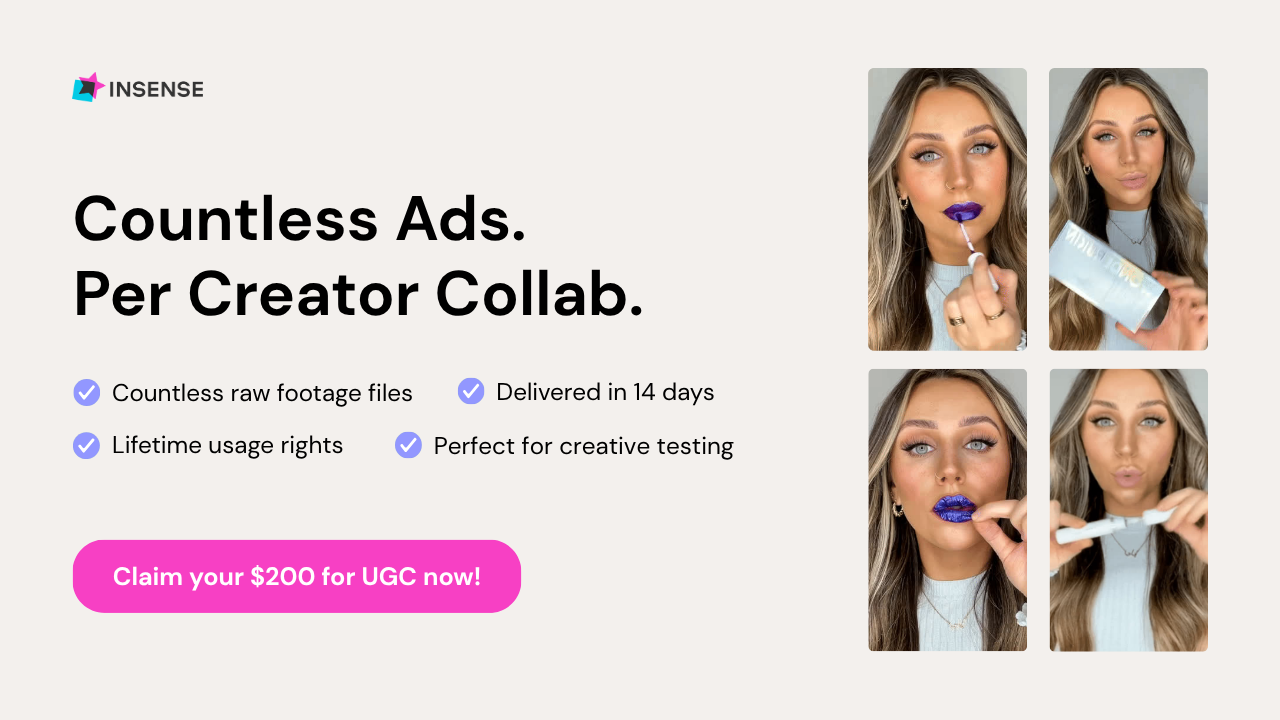
With Insense, one creator drop gives you enough raw footage to fuel an entire round of testing without blowing up your team’s bandwidth.
- 20+ raw assets per creator, you can turn into countless variations.
- Fast 14-day turnaround so you stay ahead of Q5 spend.
- Lifetime usage rights, so every winning cut keeps earning for months.
That’s why 2,000+ brands like Quip, Revolut, and Matys rely on Insense to scale UGC without killing bandwidth.
Book a free strategy call by December 12th and get $200 for your first campaign!
🏆 Tools you Cannot Miss:
🎛️ BeatViz AI – Generate AI visuals while editing them side by side in one workspace so you never switch tools.
🎙️ Voicetype AI – Write up to 9x faster across any app using AI speech to text.
🍔 MenuPhotoAI – Edit and enhance food photos fast with a pro grade AI editor built for restaurants and creators.
👶 BabyVideo AI – Turn photos into adorable AI baby style content with an instant generator.
🧵 TrafficScout – Get your first customers from Reddit in 7 days with a guided acquisition system.
🚀 Quick Hits
🤖 While others talk about AI, Lindy actually works. It turns plain-English instructions into working agents that qualify leads, automate support, and send reports across your stack, 24/7, zero code. Operators use Lindy to reclaim 10+ hours a week without adding headcount. Claim your $20 credit and build your first agent today.
🚨 OpenAI is fast-tracking GPT 5.2 for release next week after Sam Altman declared “code red,” aiming to close Google’s Gemini 3 lead as internal tests suggest the new model may already surpass it.
⚖️ The New York Times is suing Perplexity for allegedly scraping paywalled articles and producing verbatim copies, accusing the AI startup of evading robots.txt protections and diverting subscription and ad revenue through unauthorized AI summaries.
📰 Meta has signed AI licensing deals with CNN, Fox News, USA Today, and others to supply vetted news inside Meta AI, expanding partnerships as publishers escalate lawsuits against AI firms over unauthorized content use.
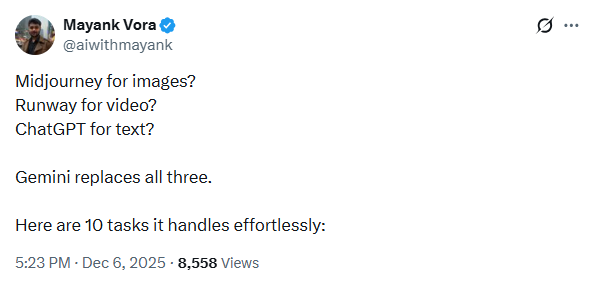
📉 New data shows ChatGPT’s growth is slowing as it holds 55% of global MAUs, while Gemini’s monthly users jumped 30% since August and image model Nano Banana helped double user time to 11 minutes per day.
🕶️ Meta has acquired AI wearable startup Limitless, ending sales of its $99 conversation recording pendant as the team joins Reality Labs to accelerate Meta’s AI enabled wearables, after raising more than $33 million in funding.
🧩 How to Generate a Marketing-Ready Customer Persona Using One Prompt
Turn messy notes and assumptions into a clean buyer persona you can use for ads, landing pages, and offers in minutes.
Paste the prompt: Drop this into ChatGPT, then fill the placeholders with inputs like state or city, typical competitor brands, and the top 3 pain points you see in reviews.
Prompt to paste:
Create 1 detailed customer persona for [Product/Category]. Use Name: [Name], Age: [Age range], Location: [US city or state], Key pain points: [3 challenges], Favorite brands: [Competitors]. Include demographics, psychographics, day in the life, triggers to buy, objections, decision criteria, purchasing habits, preferred content and channels, product preferences, plus 3 messaging angles and 3 offer ideas. Keep it concise, structured, and actionable.
🤳AI Nugget of the Day
Thanks for Decoding with us🥳
Your feedback is the key to our code! Help us elevate your Decode experience by hitting reply and sharing your input on our content and style.
Keep deciphering the AI enigma, and we'll be back with more coded mysteries unraveled just for you!